
Jack Dunn
If you’re going to take a trip down memory lane with Jack Dunn, you may want to pack some provisions.
This scenic byway stretches on for a lot of miles and, as any previous passenger will tell you, the driver provides zero evidence he has forgotten any of the milestones along the way.
Be prepared for detours, too, since it is highly likely that for every personal point of interest your guide points out, he’ll also be veering off the main route to one or more historical, and often hysterical, oh-by-the-waysides. (NOTE: A “But I Digress” T-shirt would make a perfect thanks-for-the-lift gift.)
But as anyone who has ever played for or worked alongside or sat in a classroom led by or just had a bowl of clam chowder with one of Oregon’s most legendary and revered baseball coaches will tell you, you’re in for an entertaining ride. So, grab your lunch pail and Thermos and let's get this show on the road.
"In my over 65 years in baseball, from Little League to the big leagues, my most important influence was my high school and American Legion coach, Jack Dunn. His knowledge and, more important, his ability to get the principles of the game across, set the fundamentals I utilized as a player, coach and major league manager. Jack's knowledge, energy and support made all of us who played for him the best we could be on and off the field. -- Tom Trebelhorn (Cleveland, 1966)
DUNN WAS BORN IN PORTLAND on May 31, 1929, and though he doesn’t claim to remember any of the details of that day, it’s not long after that when his memories begin. He has some recollection of living on Portland’s east side, near Hollywood Theater, where his dad, Rolland (he went by Rollie), worked as a camera operator. But most of Dunn’s childhood was spent on Alice Street in southwest Portland's Multnomah neighborhood.
“My grandparents had lived on that street, and they wound up naming it after my grandmother,” Dunn says. (WARNING: FIRST DETOUR AHEAD.) “Her brother invented the solar disk. I’ll just throw that out there.”
It was Dunn's mom, Agnes, who introduced him to the joys of baseball. “She was more of an athlete than Dad. His standing joke was, he was the only one in his family who didn’t play athletics and he was also the only one who had athlete’s foot,” Dunn recalls with a laugh.
Dunn remembers listening to radio broadcasts of Portland Beavers baseball game when he'd visit the farm his uncles owned near what is now the heavily commercial Canyon Road. He assumes that's what motivated him to bug his mom to take him and his brother, Ron, 18 month his senior, to see a live Beavers game, which she did in 1936.
With the bait hooked after that game, Mom sank it deep by taking her boys to more games that summer and then gifting them matching baseball gloves for Christmas.
“Except they weren't gloves," Dunn says. "They were catcher’s mitts. She didn’t know the difference, but it didn’t matter. One of the neighbor boys would throw balls to us and that solidified our interest in baseball.”
These were the days before Little League was founded in 1939, but the Dunn boys got a taste of organized ball playing in a 14-and-under league organized by The Oregonian and The Oregon Journal.
We fast forward now to 1943 (remember, this is a long and winding road) as Dunn heads to high school. With Wilson several years from being built, southwest Portland kids were funneled into Lincoln High, then located on the current campus of Portland State. Once there, Dunn adapts quickly and makes the varsity baseball team as a freshman. Not that he had much choice.
“Back then there was no freshman or JV baseball in high school; you either made varsity or you didn’t play,” Dunn recalls.
He played four years of varsity ball on a team stacked with good players, several of whom were graduates of a highly competitive league in NW Portland's Slabtown District, famed for producing major leaguers that included future Boston and Detroit great and PIL Hall of Famer Johnny Pesky.
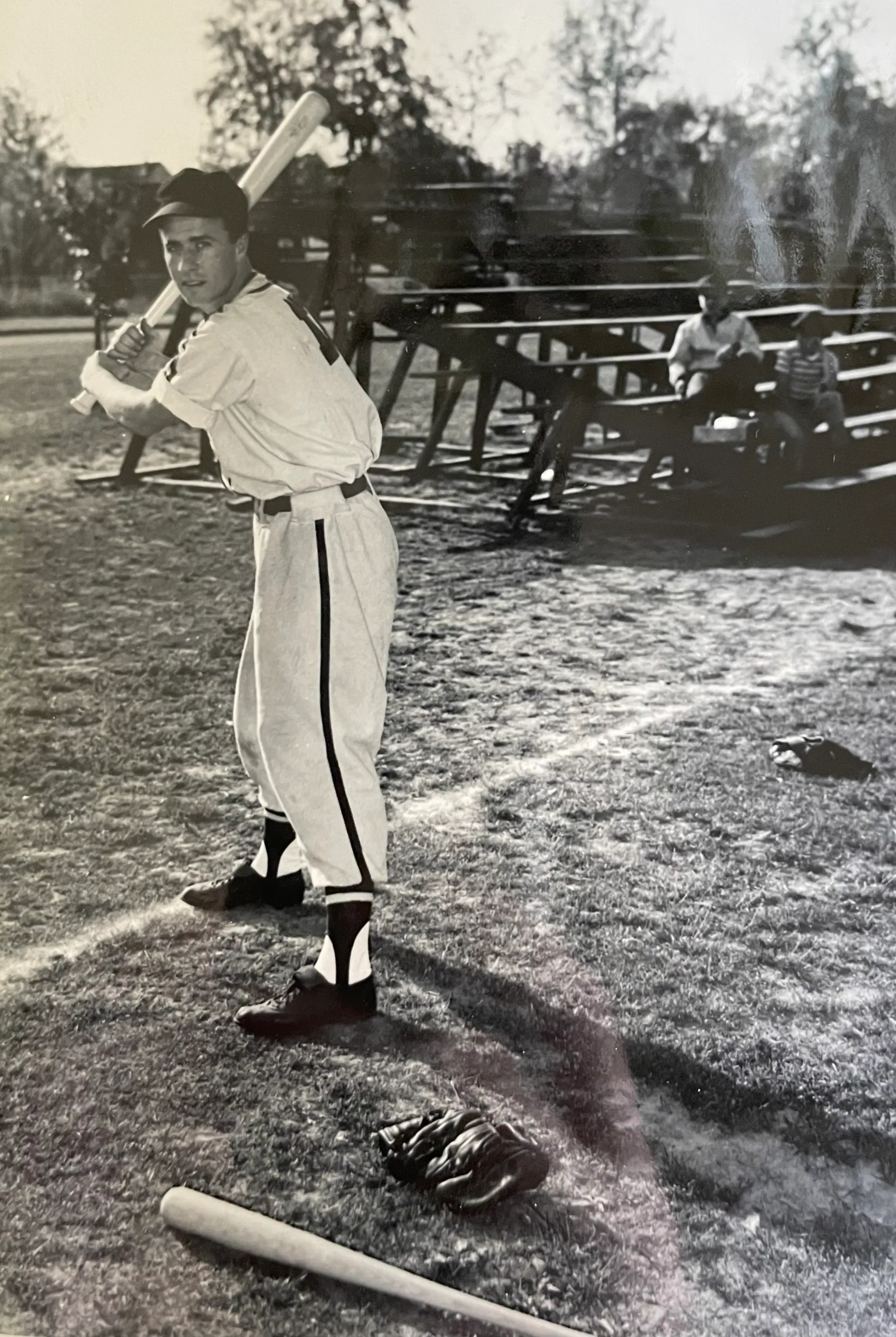
At Lincoln, Dunn was a two-time All-PIL centerfielder, “a pretty good defensive player who could run and throw,” he says before adding, “but I’m being immodest.”
He also played two years of football and basketball and was, it can now be revealed, a cheerleader.
“Don’t let that get out,” Dunn jokes before, of course, letting all the details of that get out.
“There was a senior whose job was to get guys to turn out (i.e., audition) to be cheerleaders at an assembly. He tells my buddy, Frank, and me, ‘You guys gotta do it. You’d be naturals.’ I say, ‘We wouldn't even know what to yell.’ He says, ‘It’s easy. Just yell, You Redbirds. You Redbirds. Fight, fight, fight."
Dunn breaks for a quick laugh about the quality of the chant, then continues. “So, in the assembly Frank and I go up and do that yell. Then we tell this joke that the guy told us to say. I say something to Frank like, ‘You're not very tall; what do you do when you’re with your girlfriend.’ And Frank says, ‘Well she wears low heels and walks on her knees.’”
After taking another quick break to laugh (but not to explain why the girlfriend’s low heels are relevant if she’s walking on her knees) Dunn returns to finish his tale, which ends with him veering off road again to call attention to another point of interest. “Turned out this guy was trying to make fools out of us, but we wind up winning and became cheerleaders,” he concludes, but not before adding that (former pro golfer and Hall of Famer) “Peter Jacobsen’s mother, Barbara Patterson, was one of our rally girls.”
"Having grown up in southeast Portland, getting the opportunity to play for Coach Dunn at Portland State was a dream come true. It was akin. to playing for Nick Saban at Alabama. I feel incredibly fortunate to have been part of his program and to have played under a coach whose experience extended far beyond the diamond. Coach Dunn is the gold standard in both baseball and life. -- Gabe Sandy (Franklin, 1990)
AFTER HIS SENIOR YEAR at Lincoln, Dunn continued to play in a local barnstorming league put together by a member of the Brooklyn Dodgers organization.
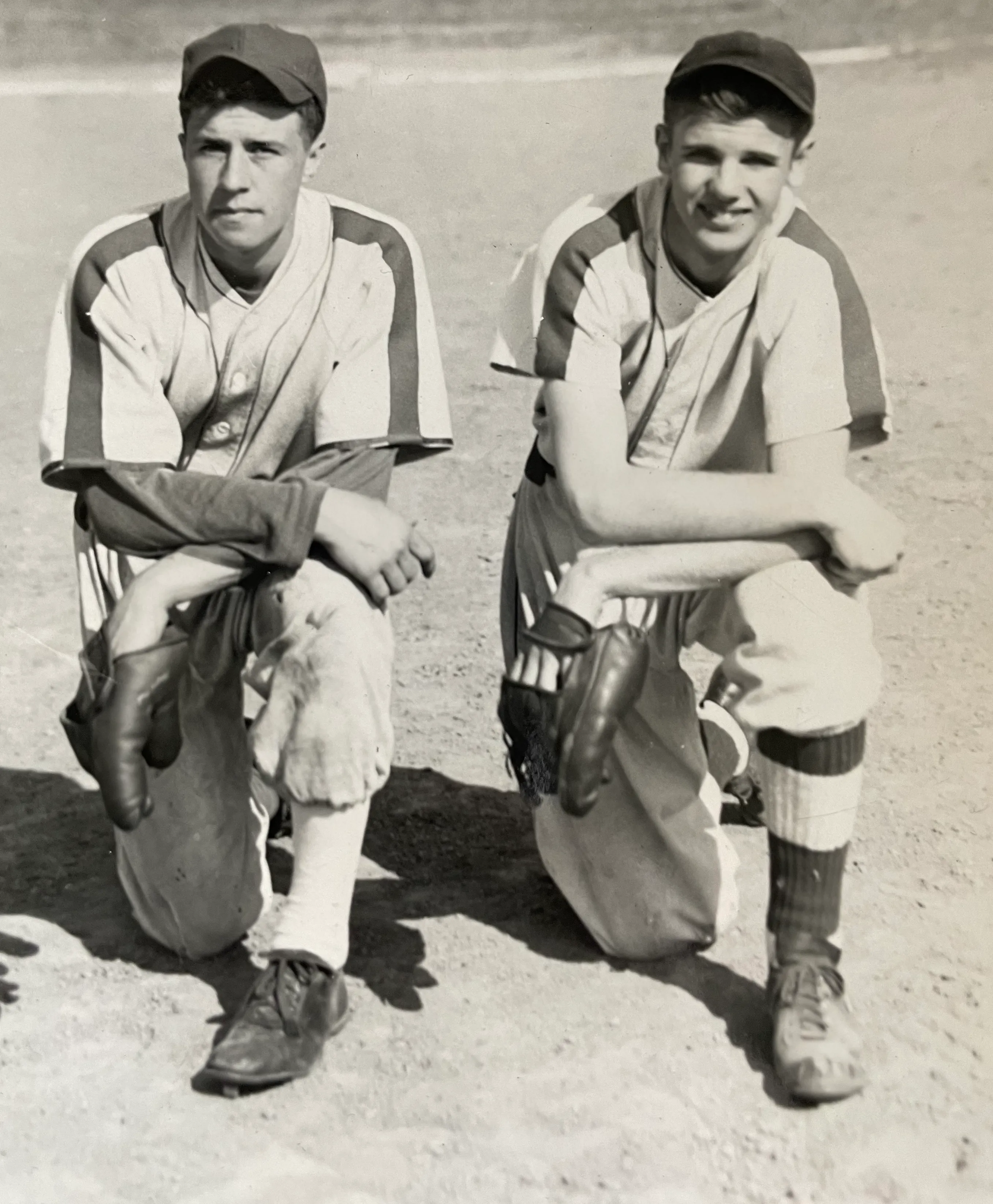
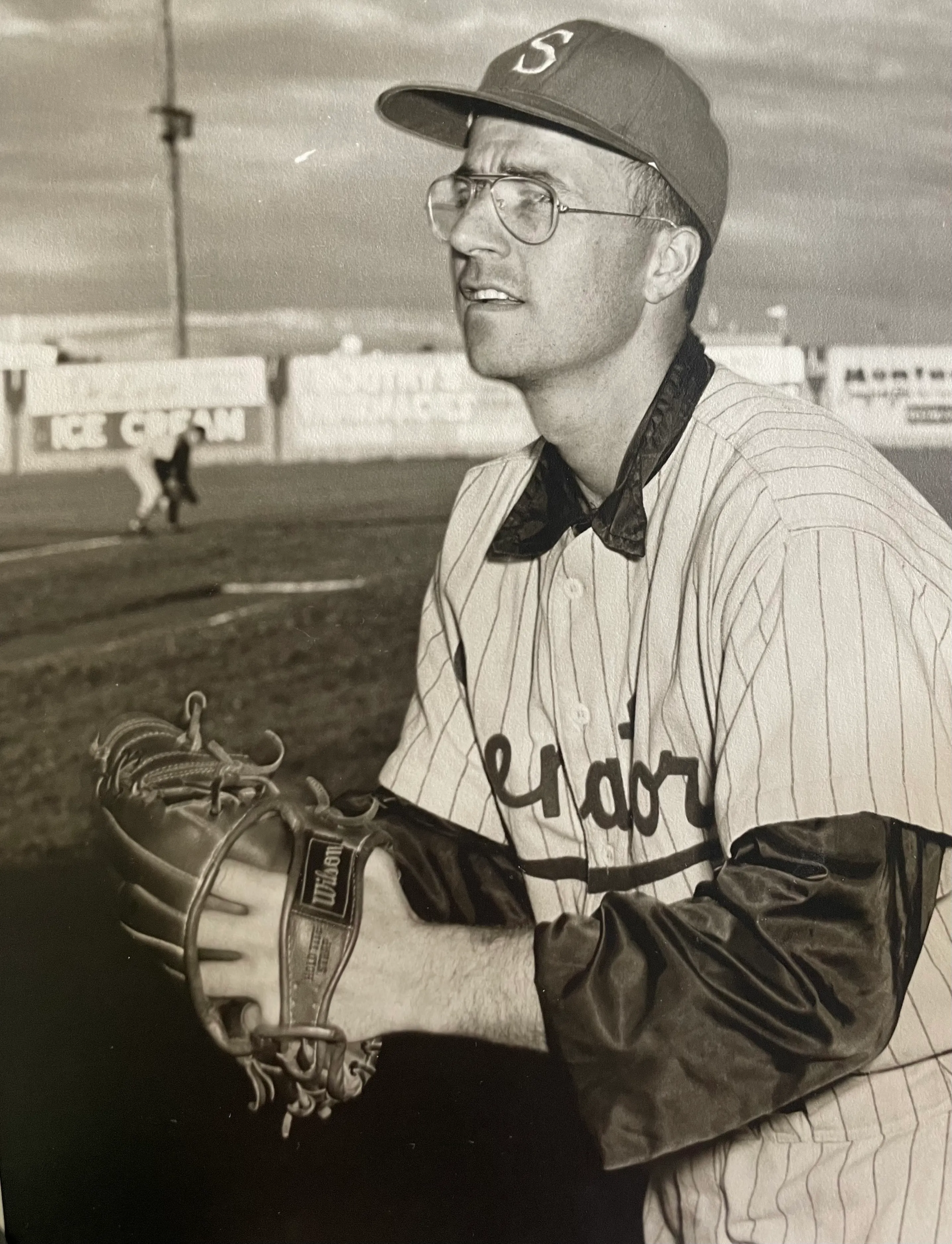
“We traveled to places like Albany and Warrenton and played local farm teams, and by that I mean teams of farmers,” Dunn remembers. “The Dodgers’ intent was to sign as many players as they could off that team, and that’s how I signed. We were called the Portland Babes and we wore the Dodgers’ old road uniforms. I had Dick Whitman’s, who just happened to go to Oregon.”
Dunn signed his contract with the Dodgers in 1948, then took classes at Oregon State for a quarter before leaving school in March 1949 to head to spring training and begin his minor league career.
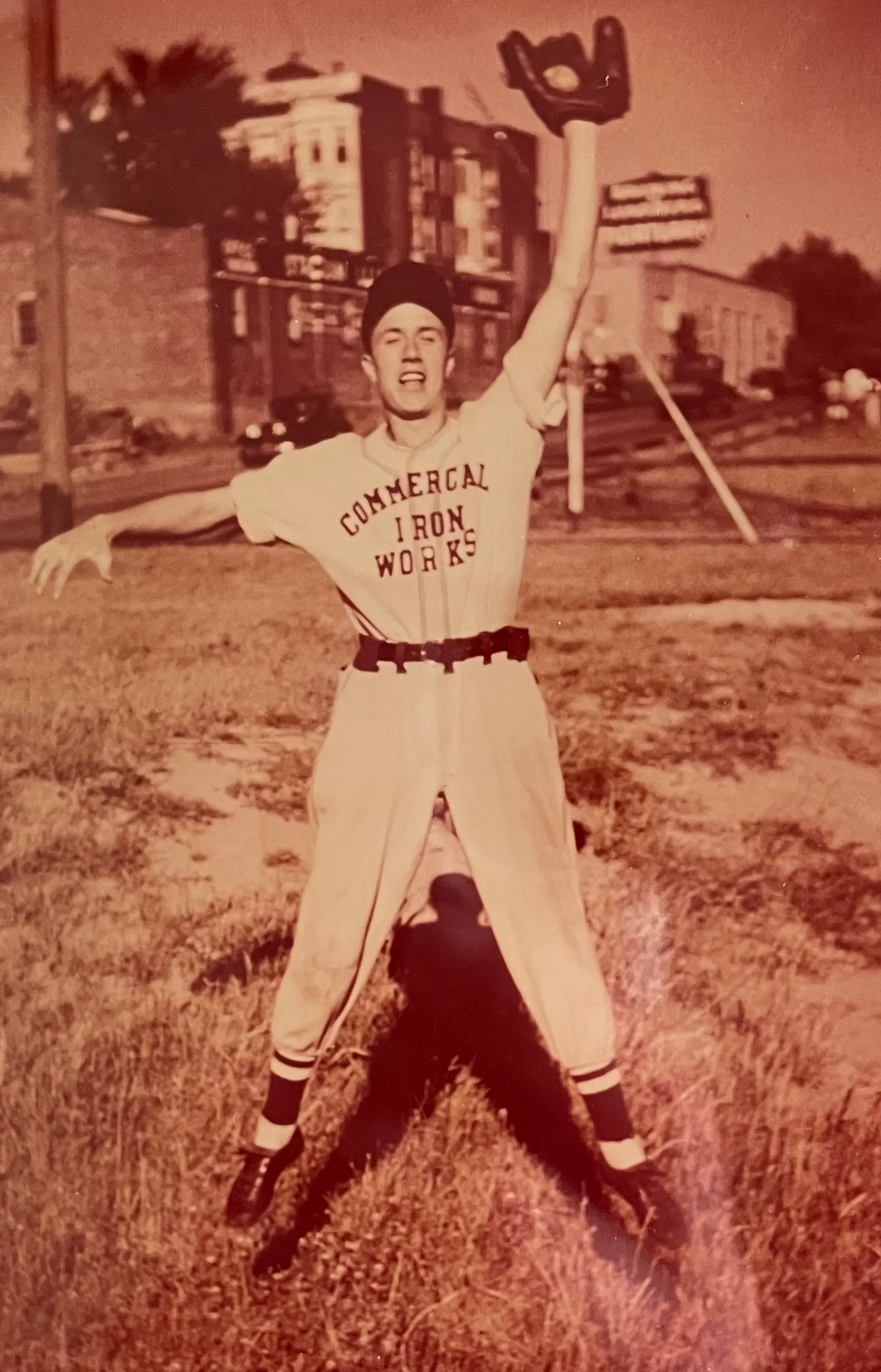
He played for Dodgers' farm teams in Medford (along with his brother Ron, who had signed with the Dodgers in 1950 after playing baseball and basketball at Linfield), Billings, Montana, and Douglas-Bisbee, Arizona (whose points of interest, our driver points out, included the "world’s greatest climate," a copper mine and Dunn’s .302 batting average, a figure that has become the stuff of baseball lore through multiple generations of the Dunn family).
Then in 1950, faced with the choice of either returning to school or almost certainly being drafted to fight in the Korean War, Dunn returned to OSU. It would be a short stay.
That fall, Ron, his girlfriend and another couple were heading out 82nd Avenue on a double date when their car was hit by a drunk driver, killing all but one of the passengers. After his brother's death, Dunn left OSU and took classes at Vanport Community College until reporting to the Dodgers again in June 1951.
That year he went from Santa Barbara to Newport News, Virginia, to somewhere in Mississippi in the span of just a few weeks, which was enough to convince him his future was somewhere other than professional baseball.
But he wasn't done playing. In 1952, Dunn went back to being a full-time college student while also playing semi-pro ball with Archer Blower and Pipe, earning city-league MVP honors and helping the team win a state championship. Then when Southern Oregon lumber mill owners formed a new "sawdust" league, Dunn got recruited to play for the Coos Bay/North Bend Lumberjacks, which he did in 1953 and '54.
It was while playing for Archer Blower that Dunn met Roy Carlson, then the baseball coach at Cleveland High. (He was also a bachelor, our driver points out...perhaps for the benefit of any of our single lady passengers planning some time-travel back to the 50s?). A few years later, in 1955, Carlson reaches out to Dunn and tells him he’s heading to the Middle East to teach for a couple years and needs a teacher and coach to replace him temporarily at Cleveland.
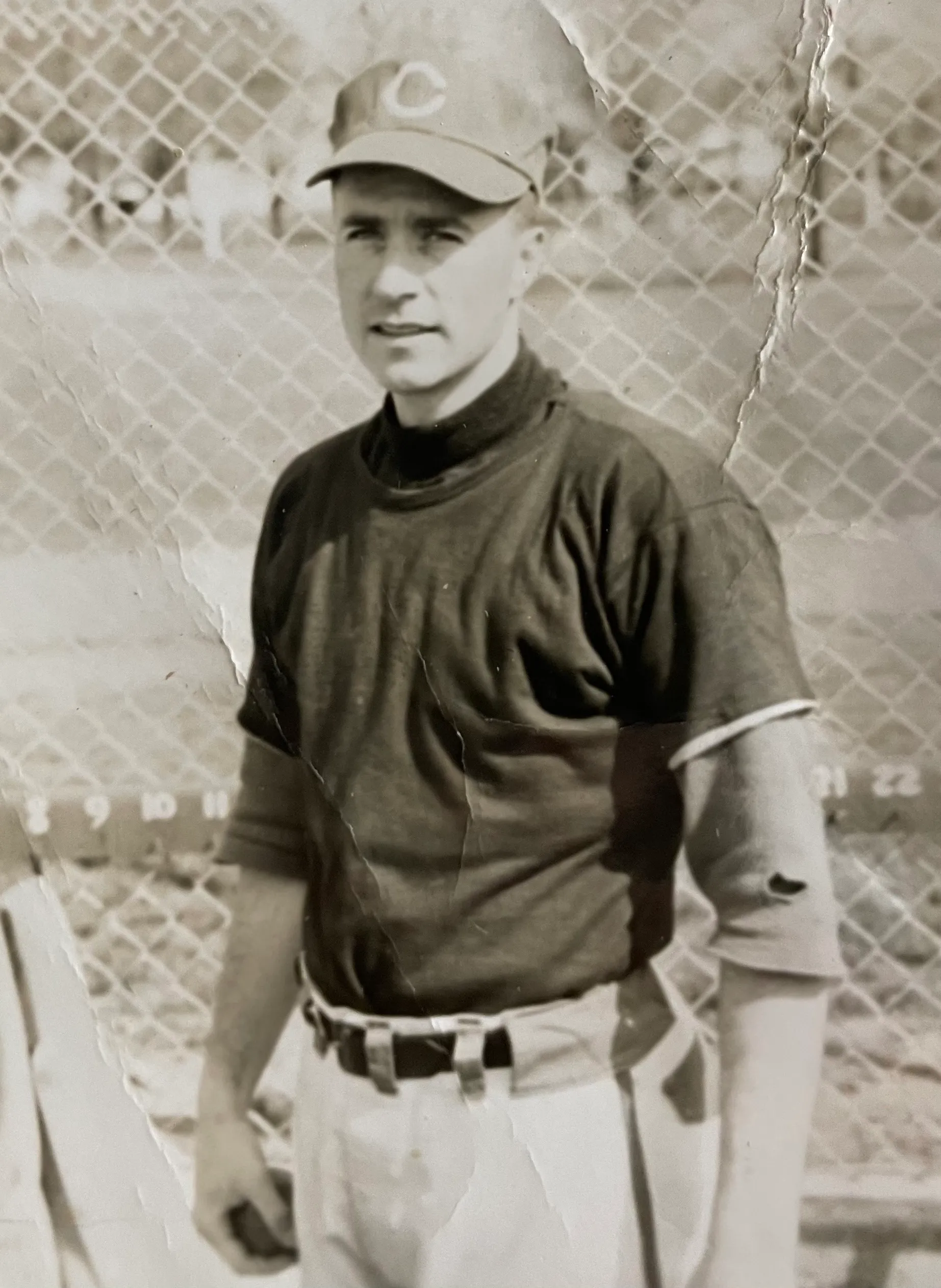
“He says, ‘You’re my man,'” Dunn remembers. “I say, ‘What the heck are you talking about? I haven't even graduated yet, and I’m not going to be a teacher. He tells me he’s setting up an appointment with Cleveland’s principal, and I tell him I’m not going.”
So Dunn goes (but only after more cajoling). “And I’ll be damned if they don’t hire me,” he says. “They thought that, because I played pro ball, I had greater knowledge than I had.”
Dunn finished up his degree at University of Oregon then a student teaching stint at South Eugene high, and started at Cleveland in the fall of 1955. When Carlson returned a couple years later, he didn’t want his old job back and, by then, Dunn didn’t want to give it up anyway.
"Jack Dunn was such a role model for me, first as a coach at Cleveland, but later as a man. He is one of a kind, a special person who cares so much for all his former players. It was always motivation to make him proud. I'm lucky and proud to have called him a friend all these years." -- Dwight Jaynes, longtime Portland sportswriter/personality
OVER THE COURSE OF 14 YEARS at Cleveland, Dunn’s teams made the league playoffs every year but one, winning one PIL title. And while it took him a few years to start an American Legion team because he was still playing summers with the Salem Senators of the Northwest League, he eventually got one going and, in 1961, took his team to the state finals.
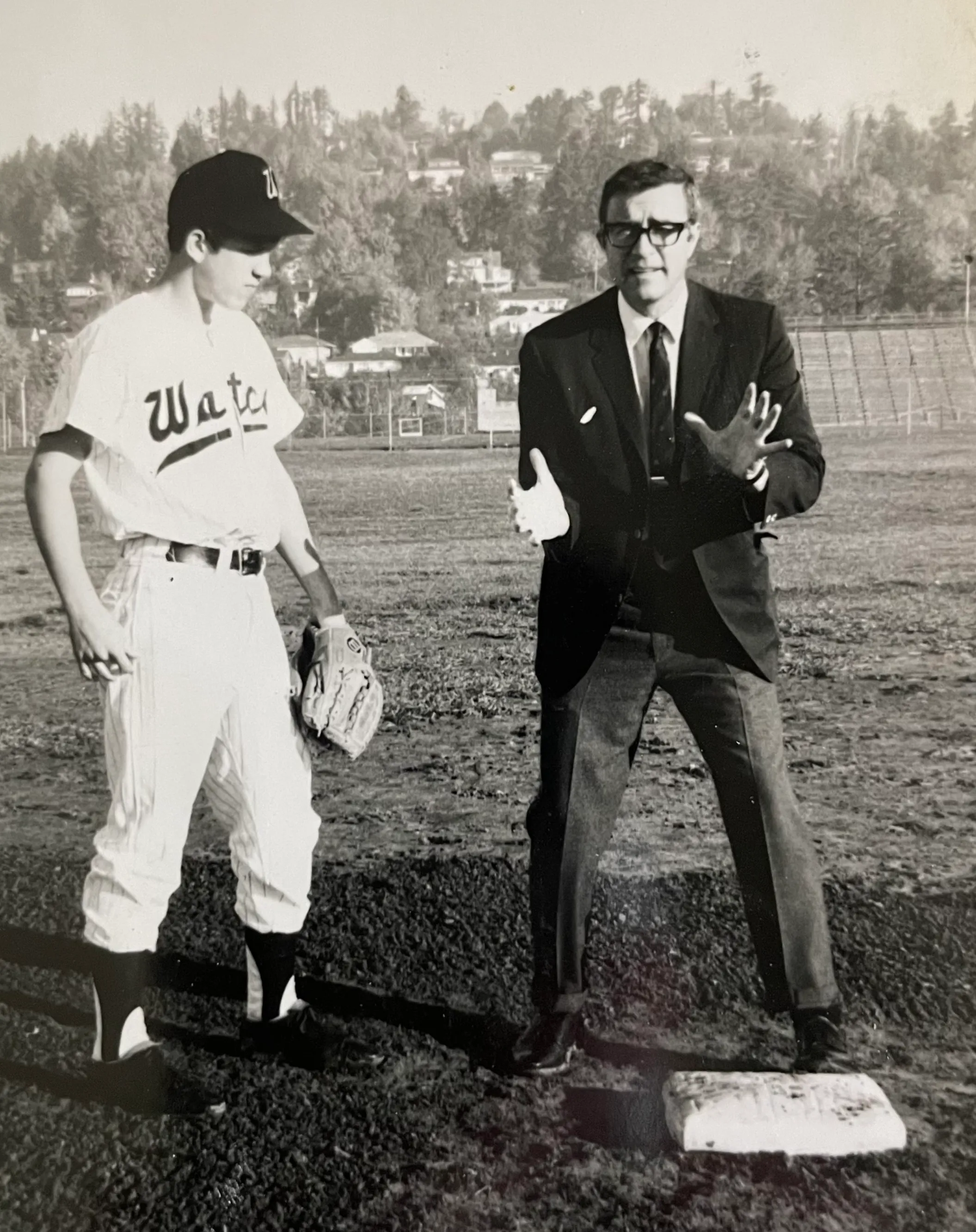
In 1969, Dunn moved across town to Wilson, where he took over a program that hadn’t experienced much success since the school’s founding a decade earlier. But by the time he left in 1974, Dunn had built Wilson into a PIL power and the school's American Legion team, Watco Electric, into a summer juggernaut.
The Trojans won PIL titles in ’72 and ’73. Watco won state titles the same years and in ‘73 advanced all the way to the American Legion World Series, where, led by a line-up that featured future MLB MVP Dale Murphy and Dunn’s oldest son, John, they finished third. Watco won a third state title in ’75.
Dunn’s Watco teams went four-plus years without losing a league game.
Those accomplishments caught someone's eye at Portland State, which would be his next and last coaching stop. Dunn led the Vikings program for 20 years and never had a losing season, retiring in 1994 with a career record of 630-439 record. In 1984, the Viks won the Pac-10 Northern Division, competing against Oregon State, Washington and Washington State.
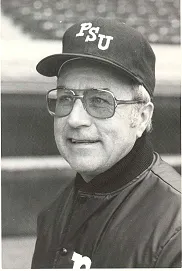
“Every day with him was a tutorial, not only in how to coach but also how to become an effective and gracious communicator," says Rob Nelson, who is best known as the inventor of Big League Chew, but also spent two seasons as an assistant to Dunn at Portland State in the late '70s. "I felt like I should have been paying tuition to the university.”
"The trouble with you, Jack, is you think you're too damn smart." -- Wade Williams
THROUGHOUT HIS COACHING CAREER, Dunn says he leaned heavily on the shoulders of coaches he’d looked up to over the years.
“For the first few years, most of the other coaches took me to school,” he says. “But I learned from them by getting whupped.”
His earliest mentor was Wade Williams, who made Dunn his batboy when he was coaching in the Slabtown league, became his coach at Lincoln, then continued to attend games and critique his protégé’s performance throughout Dunn's career.
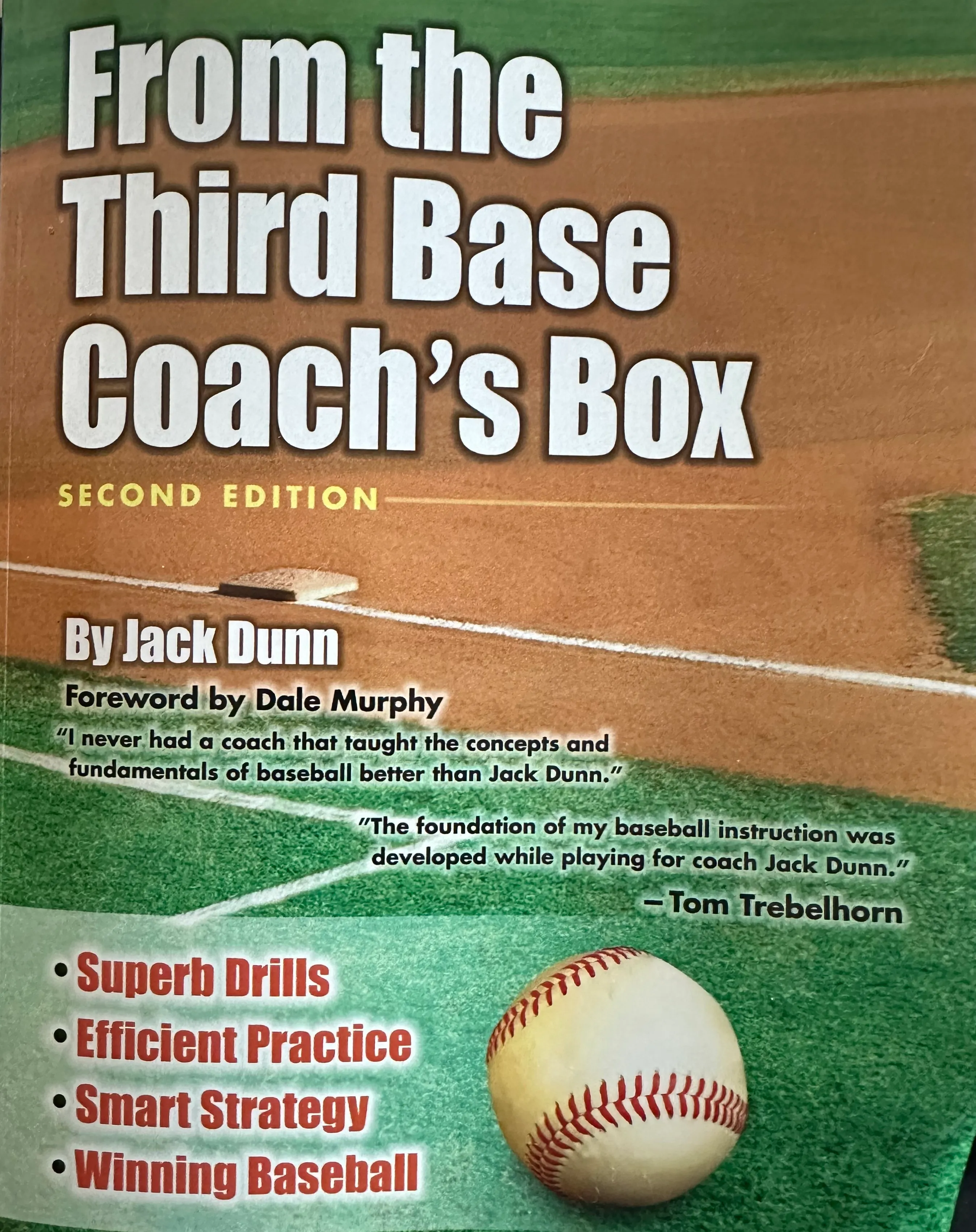
Williams’ mentorship was one of the primary influences in Dunn’s decision to write his comprehensive strategy manual, From the Third Base Coaches Box, first published in 2008. (He also co-authored a children's book with one of his 10 grandchildren, Rebecca Dunn.)
“Wade was the first baseball strategist I met,” Dunn says. “Everybody else just played vanilla baseball; they’d just have their teams go out and hack the ball around. Wade would say to me, ‘Take what I give you, improve on it and pass it on.’ I relied on him for years. (EXIT TO NEXT WAYSIDE) Incidentally, his wife, Thelma Hollingsworth, was the first Rose Festival Princess.”
Dunn says he's also indebted to Art Verment, whom he got to know when his brother Ron played basketball at Linfield. Twenty years later, Dunn would learn about practice organization and running a disciplined program from Verment while serving as his assistant basketball coach at Cleveland.
The list of additional coaches whose influences helped shape Dunn's own baseball philosophy and teachings is long enough to fill two pages of acknowledgments in From the Third Base Coach’s Box. Of course, there’s a pretty long list of coaches who feel they owe a debt of gratitude to their old coach, too, including one former MLB manager and PIL Hall of Famer in Tom Trebelhorn, as well as Mike Clopton, who coached Wilson from 1983 to 2014 and now has a place in both the PIL and Oregon Sports halls of fame.
"I have always said that I never had a coach that taught the concepts and fundamentals of baseball better than my high school coach, Jack Dunn...he is someone who has been down the road and back many times, and not only understands the roads to take, but why you should take them." -- Dale Murphy, former Wilson star and major league MVP (from his foreward to From the Third Base Coach's Box)
THE LAST STOP in our road trip is The Cider Mill, the venerable Vermont Street watering hole that’s roughly equidistant between the high school formerly known as Wilson, Ida B. Wells, and Dunn's comfortable home.
He's lived there (his home, not The Cider Mill) since 1960, and it holds a virtual lifetime of memories, a small sampling of which cover the walls of his small office -- multiple halls of fame plaques and coach of the year awards; a framed photo and baseball card of former PSU player and major leaguer, the late Steve Olin; a painting of Murphy.
This is where Dunn and his wife of 44 years, Jean, who passed in 1997, raised their sons, John, Jeff and Jim. All three wound up signing pro contracts after playing for their dad at Wilson and Portland State and are now members of the PIL Hall of Fame (which John has led as president for several years).
The Cider Mill has been just a few blocks away all these years, and Dunn still visits it enough to be recognized by servers, though not so much that the customers at the bar holler "Jack!!!" in unison when he makes his entrance.
But that might well have happened on a sunny Portland Friday last May had Dunn been the last to arrive when 125 or so humans packed the joint to celebrate their former coach or colleague or teacher or current friend or family member. The occasion was Dunn's crossing of home plate after his 96th trip around the base paths.
But who’s keeping score? Dunn doesn’t appear to be, certainly not during that gathering of admirers, with him basking in good health and good company and enjoying the bounty collected from an excursion through the taco bar.
There’s not a moment when he isn’t in conversation with one or more well-wishers from his past, often as not a former player. Ask him to name his proudest career achievements and these are the guys, many of them now in their 70s, he’d point to.
“What’s important to me is seeing those kids go on and prosper and be contributing members of society,” he says. “I’d tell my players, I don’t give a damn if you play pro ball, you’re all big leaguers to me. That’s not just me whistling Dixie. I mean that sincerely. The achievements of my former players, I share in…if not try to take all the credit for,” he adds with another laugh.
There’s plenty of those at this affair, especially during a short break that featured Jim Dunn hosting a hilarious game of Jack Dunn Jeopardy, with brothers, John and Jeff, and former Dunn player and PIL Hall of Famer, Jason Porter, as contestants.
Excerpt:
JOHN: I’ll take “Baseball for 100.”
JIM: “The Answer is” Vladimir Putin, President Zelenksy and Prime Minister Netanyahu.”
JOHN: “Who are the only three people in the world who don’t know Coach Dunn’s bunt sign?”
The bit gets a big laugh from the crowd of insiders, and, sure, it's an inside joke. But the senior Dunn has another story in his anthology that demonstrates how on point it is, even if slightly exaggerated.
"We're (PSU) playing Washington State. We're up 4-2 in the seventh or eighth with runners on first and second. A kid comes up to bat (FINAL ROADSIDE ATTRACTION ON YOUR RIGHT) -- he's a dentist now -- and I give him the bunt sign. He gives me a look that says he doesn't want to bunt and then gives me a sign we had that indicates he wants me to go around again. So I go around the signs again and he gives me the same look. Now, if you really don't want to do what I'm telling you, you call time out and tie your shoe. So this kid gets on a knee and is retying his shoe and looking at me and I give him the bunt sign yet again and at this point Bobo Brayton (the Cougars' legendary coach and well-known character) stands on the top step of his dugout and yells to the kid, 'He...wants...you...to...bunt!'"
Like a lot of Dunn's baseball stories, this one doubles as an allegory. "If the bunt's in order and everybody in ballpark knows you’re bunting, why shouldn't the batter turn early and be ready to bunt?"
It's a good point, but then of course it is. Dunn has traveled a lot of miles and learned and taught countless lessons along the way. Given all he's accomplished, he hasn't taken many wrong turns -- even he's taken some roundabout ways to get there.
For profile comments or suggestions for future profile subjects, contact Dick Baltus: [email protected]
Member Spotlight
If you’re going to take a trip down memory lane with Jack Dunn, you may want to pack some provisions.
This scenic byway stretches on for a lot of miles and, as any previous passenger will tell you, the driver provides zero evidence he has forgotten any of the milestones along the way.
Be prepared for detours, too, since it is highly likely that for every personal point of interest your guide points out, he’ll also be veering off the main route to one or more historical, and often hysterical, oh-by-the-waysides. (NOTE: A “But I Digress” T-shirt would make a perfect thanks-for-the-lift gift.)
But as anyone who has ever played for or worked alongside or sat in a classroom led by or just had a bowl of clam chowder with one of Oregon’s most legendary and revered baseball coaches will tell you, you’re in for an entertaining ride. So, grab your lunch pail and Thermos and let's get this show on the road.
"In my over 65 years in baseball, from Little League to the big leagues, my most important influence was my high school and American Legion coach, Jack Dunn. His knowledge and, more important, his ability to get the principles of the game across, set the fundamentals I utilized as a player, coach and major league manager. Jack's knowledge, energy and support made all of us who played for him the best we could be on and off the field. -- Tom Trebelhorn (Cleveland, 1966)
DUNN WAS BORN IN PORTLAND on May 31, 1929, and though he doesn’t claim to remember any of the details of that day, it’s not long after that when his memories begin. He has some recollection of living on Portland’s east side, near Hollywood Theater, where his dad, Rolland (he went by Rollie), worked as a camera operator. But most of Dunn’s childhood was spent on Alice Street in southwest Portland's Multnomah neighborhood.
“My grandparents had lived on that street, and they wound up naming it after my grandmother,” Dunn says. (WARNING: FIRST DETOUR AHEAD.) “Her brother invented the solar disk. I’ll just throw that out there.”
It was Dunn's mom, Agnes, who introduced him to the joys of baseball. “She was more of an athlete than Dad. His standing joke was, he was the only one in his family who didn’t play athletics and he was also the only one who had athlete’s foot,” Dunn recalls with a laugh.
Dunn remembers listening to radio broadcasts of Portland Beavers baseball game when he'd visit the farm his uncles owned near what is now the heavily commercial Canyon Road. He assumes that's what motivated him to bug his mom to take him and his brother, Ron, 18 month his senior, to see a live Beavers game, which she did in 1936.
With the bait hooked after that game, Mom sank it deep by taking her boys to more games that summer and then gifting them matching baseball gloves for Christmas.
“Except they weren't gloves," Dunn says. "They were catcher’s mitts. She didn’t know the difference, but it didn’t matter. One of the neighbor boys would throw balls to us and that solidified our interest in baseball.”
These were the days before Little League was founded in 1939, but the Dunn boys got a taste of organized ball playing in a 14-and-under league organized by The Oregonian and The Oregon Journal.
We fast forward now to 1943 (remember, this is a long and winding road) as Dunn heads to high school. With Wilson several years from being built, southwest Portland kids were funneled into Lincoln High, then located on the current campus of Portland State. Once there, Dunn adapts quickly and makes the varsity baseball team as a freshman. Not that he had much choice.
“Back then there was no freshman or JV baseball in high school; you either made varsity or you didn’t play,” Dunn recalls.
He played four years of varsity ball on a team stacked with good players, several of whom were graduates of a highly competitive league in NW Portland's Slabtown District, famed for producing major leaguers that included future Boston and Detroit great and PIL Hall of Famer Johnny Pesky.
At Lincoln, Dunn was a two-time All-PIL centerfielder, “a pretty good defensive player who could run and throw,” he says before adding, “but I’m being immodest.”
He also played two years of football and basketball and was, it can now be revealed, a cheerleader.
“Don’t let that get out,” Dunn jokes before, of course, letting all the details of that get out.
“There was a senior whose job was to get guys to turn out (i.e., audition) to be cheerleaders at an assembly. He tells my buddy, Frank, and me, ‘You guys gotta do it. You’d be naturals.’ I say, ‘We wouldn't even know what to yell.’ He says, ‘It’s easy. Just yell, You Redbirds. You Redbirds. Fight, fight, fight."
Dunn breaks for a quick laugh about the quality of the chant, then continues. “So, in the assembly Frank and I go up and do that yell. Then we tell this joke that the guy told us to say. I say something to Frank like, ‘You're not very tall; what do you do when you’re with your girlfriend.’ And Frank says, ‘Well she wears low heels and walks on her knees.’”
After taking another quick break to laugh (but not to explain why the girlfriend’s low heels are relevant if she’s walking on her knees) Dunn returns to finish his tale, which ends with him veering off road again to call attention to another point of interest. “Turned out this guy was trying to make fools out of us, but we wind up winning and became cheerleaders,” he concludes, but not before adding that (former pro golfer and Hall of Famer) “Peter Jacobsen’s mother, Barbara Patterson, was one of our rally girls.”
"Having grown up in southeast Portland, getting the opportunity to play for Coach Dunn at Portland State was a dream come true. It was akin. to playing for Nick Saban at Alabama. I feel incredibly fortunate to have been part of his program and to have played under a coach whose experience extended far beyond the diamond. Coach Dunn is the gold standard in both baseball and life. -- Gabe Sandy (Franklin, 1990)
AFTER HIS SENIOR YEAR at Lincoln, Dunn continued to play in a local barnstorming league put together by a member of the Brooklyn Dodgers organization.
“We traveled to places like Albany and Warrenton and played local farm teams, and by that I mean teams of farmers,” Dunn remembers. “The Dodgers’ intent was to sign as many players as they could off that team, and that’s how I signed. We were called the Portland Babes and we wore the Dodgers’ old road uniforms. I had Dick Whitman’s, who just happened to go to Oregon.”
Dunn signed his contract with the Dodgers in 1948, then took classes at Oregon State for a quarter before leaving school in March 1949 to head to spring training and begin his minor league career.
He played for Dodgers' farm teams in Medford (along with his brother Ron, who had signed with the Dodgers in 1950 after playing baseball and basketball at Linfield), Billings, Montana, and Douglas-Bisbee, Arizona (whose points of interest, our driver points out, included the "world’s greatest climate," a copper mine and Dunn’s .302 batting average, a figure that has become the stuff of baseball lore through multiple generations of the Dunn family).
Then in 1950, faced with the choice of either returning to school or almost certainly being drafted to fight in the Korean War, Dunn returned to OSU. It would be a short stay.
That fall, Ron, his girlfriend and another couple were heading out 82nd Avenue on a double date when their car was hit by a drunk driver, killing all but one of the passengers. After his brother's death, Dunn left OSU and took classes at Vanport Community College until reporting to the Dodgers again in June 1951.
That year he went from Santa Barbara to Newport News, Virginia, to somewhere in Mississippi in the span of just a few weeks, which was enough to convince him his future was somewhere other than professional baseball.
But he wasn't done playing. In 1952, Dunn went back to being a full-time college student while also playing semi-pro ball with Archer Blower and Pipe, earning city-league MVP honors and helping the team win a state championship. Then when Southern Oregon lumber mill owners formed a new "sawdust" league, Dunn got recruited to play for the Coos Bay/North Bend Lumberjacks, which he did in 1953 and '54.
It was while playing for Archer Blower that Dunn met Roy Carlson, then the baseball coach at Cleveland High. (He was also a bachelor, our driver points out...perhaps for the benefit of any of our single lady passengers planning some time-travel back to the 50s?). A few years later, in 1955, Carlson reaches out to Dunn and tells him he’s heading to the Middle East to teach for a couple years and needs a teacher and coach to replace him temporarily at Cleveland.
“He says, ‘You’re my man,'” Dunn remembers. “I say, ‘What the heck are you talking about? I haven't even graduated yet, and I’m not going to be a teacher. He tells me he’s setting up an appointment with Cleveland’s principal, and I tell him I’m not going.”
So Dunn goes (but only after more cajoling). “And I’ll be damned if they don’t hire me,” he says. “They thought that, because I played pro ball, I had greater knowledge than I had.”
Dunn finished up his degree at University of Oregon then a student teaching stint at South Eugene high, and started at Cleveland in the fall of 1955. When Carlson returned a couple years later, he didn’t want his old job back and, by then, Dunn didn’t want to give it up anyway.
"Jack Dunn was such a role model for me, first as a coach at Cleveland, but later as a man. He is one of a kind, a special person who cares so much for all his former players. It was always motivation to make him proud. I'm lucky and proud to have called him a friend all these years." -- Dwight Jaynes, longtime Portland sportswriter/personality
OVER THE COURSE OF 14 YEARS at Cleveland, Dunn’s teams made the league playoffs every year but one, winning one PIL title. And while it took him a few years to start an American Legion team because he was still playing summers with the Salem Senators of the Northwest League, he eventually got one going and, in 1961, took his team to the state finals.
In 1969, Dunn moved across town to Wilson, where he took over a program that hadn’t experienced much success since the school’s founding a decade earlier. But by the time he left in 1974, Dunn had built Wilson into a PIL power and the school's American Legion team, Watco Electric, into a summer juggernaut.
The Trojans won PIL titles in ’72 and ’73. Watco won state titles the same years and in ‘73 advanced all the way to the American Legion World Series, where, led by a line-up that featured future MLB MVP Dale Murphy and Dunn’s oldest son, John, they finished third. Watco won a third state title in ’75.
Dunn’s Watco teams went four-plus years without losing a league game.
Those accomplishments caught someone's eye at Portland State, which would be his next and last coaching stop. Dunn led the Vikings program for 20 years and never had a losing season, retiring in 1994 with a career record of 630-439 record. In 1984, the Viks won the Pac-10 Northern Division, competing against Oregon State, Washington and Washington State.
“Every day with him was a tutorial, not only in how to coach but also how to become an effective and gracious communicator," says Rob Nelson, who is best known as the inventor of Big League Chew, but also spent two seasons as an assistant to Dunn at Portland State in the late '70s. "I felt like I should have been paying tuition to the university.”
"The trouble with you, Jack, is you think you're too damn smart." -- Wade Williams
THROUGHOUT HIS COACHING CAREER, Dunn says he leaned heavily on the shoulders of coaches he’d looked up to over the years.
“For the first few years, most of the other coaches took me to school,” he says. “But I learned from them by getting whupped.”
His earliest mentor was Wade Williams, who made Dunn his batboy when he was coaching in the Slabtown league, became his coach at Lincoln, then continued to attend games and critique his protégé’s performance throughout Dunn's career.
Williams’ mentorship was one of the primary influences in Dunn’s decision to write his comprehensive strategy manual, From the Third Base Coaches Box, first published in 2008. (He also co-authored a children's book with one of his 10 grandchildren, Rebecca Dunn.)
“Wade was the first baseball strategist I met,” Dunn says. “Everybody else just played vanilla baseball; they’d just have their teams go out and hack the ball around. Wade would say to me, ‘Take what I give you, improve on it and pass it on.’ I relied on him for years. (EXIT TO NEXT WAYSIDE) Incidentally, his wife, Thelma Hollingsworth, was the first Rose Festival Princess.”
Dunn says he's also indebted to Art Verment, whom he got to know when his brother Ron played basketball at Linfield. Twenty years later, Dunn would learn about practice organization and running a disciplined program from Verment while serving as his assistant basketball coach at Cleveland.
The list of additional coaches whose influences helped shape Dunn's own baseball philosophy and teachings is long enough to fill two pages of acknowledgments in From the Third Base Coach’s Box. Of course, there’s a pretty long list of coaches who feel they owe a debt of gratitude to their old coach, too, including one former MLB manager and PIL Hall of Famer in Tom Trebelhorn, as well as Mike Clopton, who coached Wilson from 1983 to 2014 and now has a place in both the PIL and Oregon Sports halls of fame.
"I have always said that I never had a coach that taught the concepts and fundamentals of baseball better than my high school coach, Jack Dunn...he is someone who has been down the road and back many times, and not only understands the roads to take, but why you should take them." -- Dale Murphy, former Wilson star and major league MVP (from his foreward to From the Third Base Coach's Box)
THE LAST STOP in our road trip is The Cider Mill, the venerable Vermont Street watering hole that’s roughly equidistant between the high school formerly known as Wilson, Ida B. Wells, and Dunn's comfortable home.
He's lived there (his home, not The Cider Mill) since 1960, and it holds a virtual lifetime of memories, a small sampling of which cover the walls of his small office -- multiple halls of fame plaques and coach of the year awards; a framed photo and baseball card of former PSU player and major leaguer, the late Steve Olin; a painting of Murphy.
This is where Dunn and his wife of 44 years, Jean, who passed in 1997, raised their sons, John, Jeff and Jim. All three wound up signing pro contracts after playing for their dad at Wilson and Portland State and are now members of the PIL Hall of Fame (which John has led as president for several years).
The Cider Mill has been just a few blocks away all these years, and Dunn still visits it enough to be recognized by servers, though not so much that the customers at the bar holler "Jack!!!" in unison when he makes his entrance.
But that might well have happened on a sunny Portland Friday last May had Dunn been the last to arrive when 125 or so humans packed the joint to celebrate their former coach or colleague or teacher or current friend or family member. The occasion was Dunn's crossing of home plate after his 96th trip around the base paths.
But who’s keeping score? Dunn doesn’t appear to be, certainly not during that gathering of admirers, with him basking in good health and good company and enjoying the bounty collected from an excursion through the taco bar.
There’s not a moment when he isn’t in conversation with one or more well-wishers from his past, often as not a former player. Ask him to name his proudest career achievements and these are the guys, many of them now in their 70s, he’d point to.
“What’s important to me is seeing those kids go on and prosper and be contributing members of society,” he says. “I’d tell my players, I don’t give a damn if you play pro ball, you’re all big leaguers to me. That’s not just me whistling Dixie. I mean that sincerely. The achievements of my former players, I share in…if not try to take all the credit for,” he adds with another laugh.
There’s plenty of those at this affair, especially during a short break that featured Jim Dunn hosting a hilarious game of Jack Dunn Jeopardy, with brothers, John and Jeff, and former Dunn player and PIL Hall of Famer, Jason Porter, as contestants.
Excerpt:
JOHN: I’ll take “Baseball for 100.”
JIM: “The Answer is” Vladimir Putin, President Zelenksy and Prime Minister Netanyahu.”
JOHN: “Who are the only three people in the world who don’t know Coach Dunn’s bunt sign?”
The bit gets a big laugh from the crowd of insiders, and, sure, it's an inside joke. But the senior Dunn has another story in his anthology that demonstrates how on point it is, even if slightly exaggerated.
"We're (PSU) playing Washington State. We're up 4-2 in the seventh or eighth with runners on first and second. A kid comes up to bat (FINAL ROADSIDE ATTRACTION ON YOUR RIGHT) -- he's a dentist now -- and I give him the bunt sign. He gives me a look that says he doesn't want to bunt and then gives me a sign we had that indicates he wants me to go around again. So I go around the signs again and he gives me the same look. Now, if you really don't want to do what I'm telling you, you call time out and tie your shoe. So this kid gets on a knee and is retying his shoe and looking at me and I give him the bunt sign yet again and at this point Bobo Brayton (the Cougars' legendary coach and well-known character) stands on the top step of his dugout and yells to the kid, 'He...wants...you...to...bunt!'"
Like a lot of Dunn's baseball stories, this one doubles as an allegory. "If the bunt's in order and everybody in ballpark knows you’re bunting, why shouldn't the batter turn early and be ready to bunt?"
It's a good point, but then of course it is. Dunn has traveled a lot of miles and learned and taught countless lessons along the way. Given all he's accomplished, he hasn't taken many wrong turns -- even he's taken some roundabout ways to get there.
For profile comments or suggestions for future profile subjects, contact Dick Baltus: [email protected]
More On This Hall of Famer
Read about their career and accomplishments on their HoF profile page.
Other Featured Members
We have a catalog of dozens of featured members of the month.