

The Wise Bros: No Strangers to World Series
Hall of Fame Members of the Month
By Paul Danzer
For the Wise family, June 21, 1964, was a momentous day.
That afternoon at Shea Stadium in New York, Rick Wise gave his dad, Cliff, a very unique Father’s Day gift: Barely one year after graduating from Madison High, Rick earned the first of his 188 major league pitching wins.
But his 8-2 win over the Mets garnered just a small headline in The Oregonian sports section. Even in his hometown paper, Rick was upstaged by a Philadelphia Phillies teammate. In the first game of that day's doubleheader, Jim Bunning threw a perfect game, the first in the majors in 42 years.
Rick would have his share of headlines over an 18-year career — especially when almost seven years to the day (June 23, 1971) after his major league debut, he became the only pitcher in history to pitch a no-hitter and hit two home runs in a MLB game.
But on that 1964 Father’s Day, he was just an 18-year-old required to be in the majors because of the $12,000 signing bonus he received from the Phillies. Rick signed with Philadelphia a couple weeks after pitching in three games over six days to lead Madison to the 1963 high school state baseball title. That accomplishment was a special way to cap one of Portland’s more notable youth and prep sports careers.
Seven years later, history repeated when brother Tom helped the Senators to another state baseball title then signed a contract with the Houston Astros.
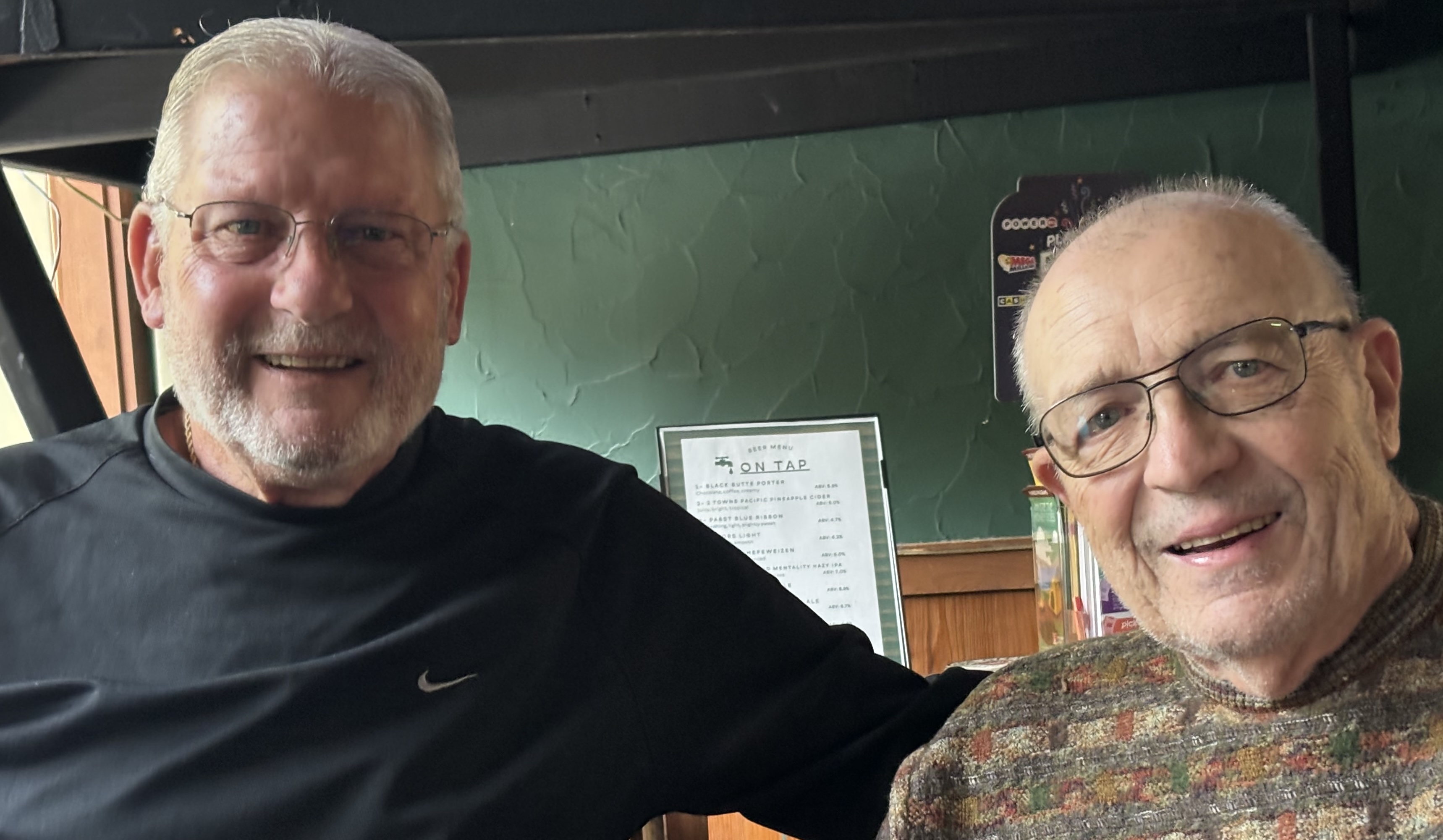
It’s easy to understand why the Wise brothers are considered among the PIL's baseball royalty.
Rick was a three-sport standout at Madison -- an all-PIL quarterback and defensive back, second-team basketball star and three-time all-PIL selection in baseball.
Tom played four years of varsity baseball at Madison — after hitting a grand slam in his first high school at bat. A first-team all-PIL selection three times and twice all-state, Tom led the PIL in pitching and hitting as a senior.
He also earned all-state recognition on the basketball court, where as a senior he led the PIL in scoring and set the Madison assists record. He was second-team all-PIL in football before a knee injury in his junior year cut his gridiron career short.
Given all the memories baseball gave the Wise brothers, one might expect a conversation with them would center around those experiences. After all, Rick was the winning pitcher in one of the most dramatic World Series games ever, and Tom also seemed destined for the big leagues until another knee injury derailed his journey.
But during a recent visit, they focused mainly on how sports shaped their lives growing up in northeast Portland, where Glenhaven Park and Gregory Heights School (now Roseway Middle School) were the stages where the Wise boys developed their skills and competitive spirits.
Father Knows Best
“At the crack of dawn we were outside,” Rick said. “And whatever sports season we were in -- football, basketball or baseball -- that's what we were playing. I loved all three sports, but I was consumed by baseball, and I also thought that that was my best chance of turning professional in.”
Rick’s earliest memories include playing catch with his parents, Cliff and Barbara in the front yard of their home on Siskiyou Street. His dad emphasized throwing strikes at a young age, and there was real incentive to be on target. The alternative was having to chase an errant pitch to the bottom of Siskiyou Street.
Rick benefited from plenty of encouragement and mentoring, not to mention athletic DNA, from Dad. At the University of Michigan, Cliff played halfback behind 1940 Heisman Trophy winner Tom Harmon. After serving in World War II, he returned to Michigan and captained the Wolverine baseball team.
The Wise family left Michigan when Cliff was recruited to fill a teaching and coaching job in Portland.
Cliff never coached his boys’ teams. He was busy as a teacher, coach and athletic director at Benson High and in those days also worked a summer job. Still, he was the major influence in his boys’ love for and success in sports.
“My dad was the biggest influence on my life,” Rick said.
All those games of catch on the front lawn laid the foundation for pitching prowess that was evident in Rick’s earliest Little League days. He recalls one game where he got all 18 outs by strikeout and gave up only one hit -- a bunt single.
Dad's emphasis, Rick said, was “Get ahead. Throw a strike. All through my career, I could close my eyes and throw a strike," he said.
Growing up, Rick never iced his arm or did anything special to prepare to pitch.
Describing the secret to his early success and longevity, Rick said, “It was how I delivered the baseball and was able to repeat the same delivery a high majority of the time. And I didn't have the fatigue. We grew up throwing baseballs and tennis balls, corks and all sorts of stuff. We were throwing all the time.”
Rick was the second of five children and the oldest of three Wise brothers. The seven years between him and Tom meant they grew up in different houses, though in the same neighborhood. Tom said that Rick and his buddies were the athletes he and his friends looked up to.
“I ran around with friends underneath the stands, chasing foul balls and everything else,” Tom said. “Watching Rick’s teams because you wanted to be like them.”
World Series Successes
The core of Rick's baseball team first made a splash in 1958, when Rose City Little League was the first Portland team to reach the Little League World Series. A 2-0 shutout of a team from Sacramento in the West Regional at Alpenrose Dairy earned Rose City one of seven spots at the 12th edition of the LLWS in South Williamsport, Pa. Rose City lost its only game, 2-1, in the then single-elimination series.
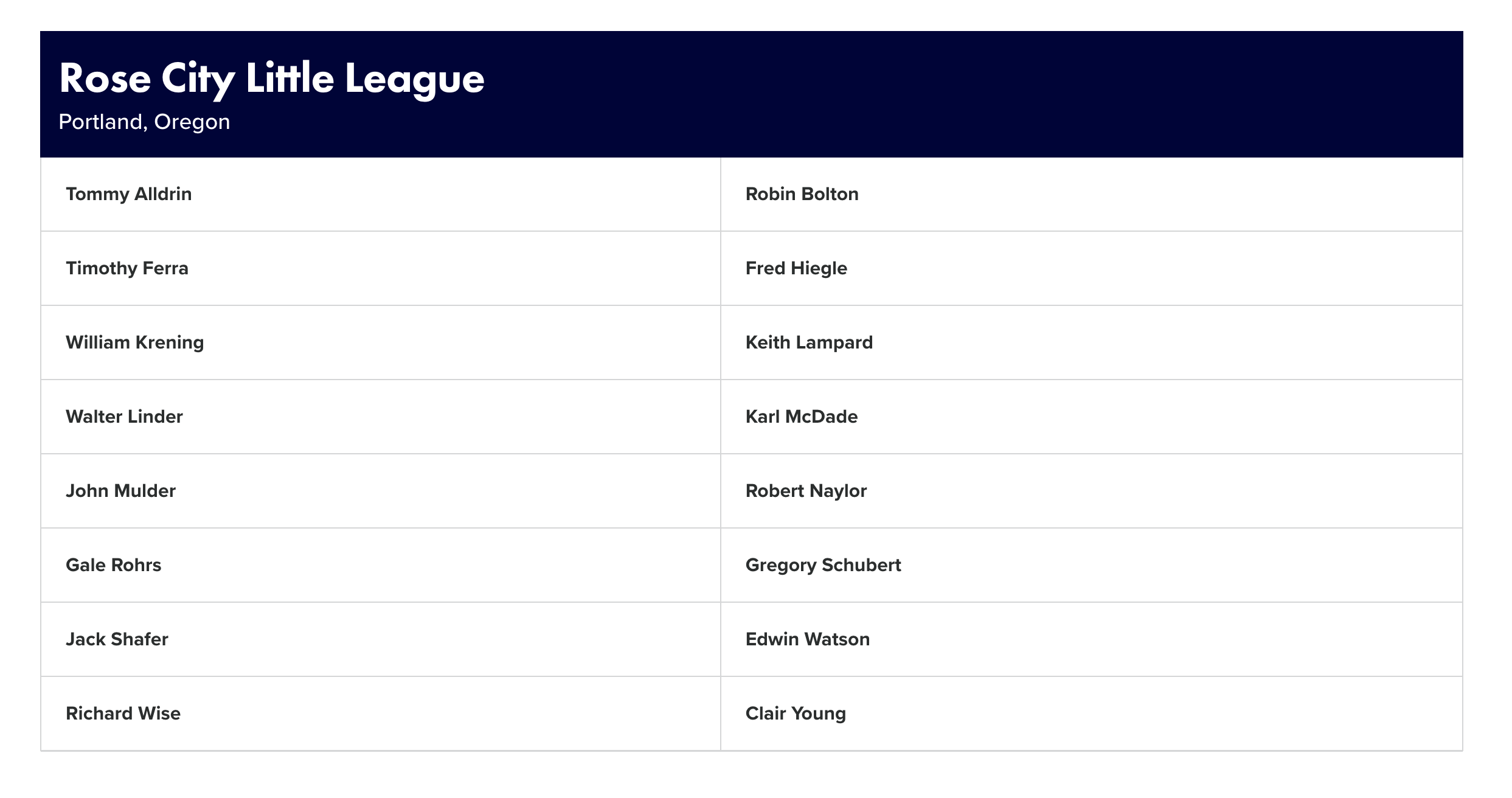
Three years later, the core of that team, which included Rick's close friend and future Madison teammate, Keith Lampard, who also played professionally, played in the 1961 Babe Ruth League World Series at Glendive, Montana. Rick starred in the Portland team’s lone win there, pitching a no-hitter and homering for the game's only run.
That performance foreshadowed perhaps Rick’s best day in the major leagues, the June 23, 1971, no-hitter at Riverfront Stadium in Cincinnati when he shut down a lineup that included Pete Rose, Johnny Bench and Tony Perez. He faced only 28 Reds, walking Dave Concepcion in the sixth inning.
What makes that day unique in MLB history is the two home runs also hit, knocking in three of the Phillies’ four runs. He hit six of his 15 career home runs that season. Rick almost certainly would have added more to his career total had he not spent six seasons in the American League (where designated hitters where used) following a 1974 trade from St. Louis to Boston,
Madison High baseball won the PIL in Rick’s sophomore, junior and senior seasons and the state title in his senior year, 1963. As a senior, Rick pitched in all three state playoff wins over a six-day period, capping his career with a 5-0 shutout of Pendleton in the title game at Multnomah Stadium (now Providence Park).
In the May 31, 1963 edition of The Oregonian, legendary sportswriter Leo Davis wrote about that game:
“Wise was in peak form for his friends and the few fans who had never seen him before. He faced only 23 men, wielded two hits, both singles, and retired the last 15 batters in order, fanning 16 in the seven innings he worked.”
.jpg)
Wise still wears the American League Championship ring he earned with the 1975 Red Sox. Among his claims to fame is being the winning pitcher in one of MLB’s most memorable games, the one ended by Carlton Fisk’s legendary 12th-inning home run in Game 6 of the 1975 World Series.
He was a two-time National League All-Star and the winning pitcher in the 1973 game. But Rick said some of his fondest baseball memories were in high school.
“My whole baseball career in high school was fabulous,” he said. “We had some very good ball players, and very good guys. We didn't have any egos. We all played for the fun of it.”
“It was fun beating people,” Rick added. “We worked hard to get where we were. We never took shortcuts. And the results showed.”
He credited Hall of Fame Coach Bill Wiitala, who was only eight years older than Rick, for pushing those Senators to be their best.
“He was very young to be our coach. Nevertheless, you couldn't have picked a better man to play under, to learn under. He coached a team that was born to be successful. But nevertheless, he was instrumental in how he channeled everyone's ability.”
Today, Rick wonders if in addition to the DNA, his own skills and all the hard work, he might also owe at least a little of his success to destiny. He recalled that as a young baby he was held by a close friend of his dad's, who just happened to be Hall-of-Fame pitcher Robin Roberts.
Multi-sport Brothers
Like his brother, Tom was able to cap his high school baseball career by help Madison baseball win a state championship. In fact, the Senators won the state tournament both his junior and senior years, in 1969 and in 1970.
In between, in the summer of 1969, Tom and his Madison mates played on the Contractors team that remains the only team from Oregon to win the American Legion World Series. That team was made up of Madison High players and coached by PIL Hall of Famer Dick McClain. The roster included fellow PIL Hall of Fame members John (Bud) Baynard, Jack Flitcraft, Dave Gasser, Steve Kebbe, Bruce Maxwell, Jim Officer and Mark Quesinberry.
Tom capped his prep baseball career by hitting a home run out of Eugene’s Civic Stadium during the 1970 State-Metro All-Star Series. It was the perfect booked to a career that began with that grand slam in his first varsity at bat.
Like Rick, Tom thrived as a multi-sport athlete. One of his favorte childhood memories is of his dad teaching him to hit and to pitch.
“We’d hit at Gregory Heights. My sister Kimmy and mom would shag and dad would pitch to me.” Tom said. "We had an old bowling-ball bag filled with 25 baseballs. I’d hit two bags of dad's fastballs. We’d round them all up, then I’d hit a bag of dad's curveballs.”
Like his older brother, and like so many boys of his generation, Tom spent much of his youth outdoors. He’d spend whole days at Glenhaven Park “playing over-the-line, double-or-nothing, home run derby.”
If there was a Babe Ruth League baseball game going on and the concession stand was open, Tom would get food and put it on his parents’ tab (much to his mother’s surprise). “I had to eat,” he chuckled.
At Madison, Tom thrived on the court and on the diamond. In basketball he played three varsity seasons, leading the PIL in scoring and setting a school record for assists as a senior. In baseball, he played four varsity seasons, was a first-team All-PIL selection three times and twice made the All-State first team.
Before signing with the Astros, Tom seriously considered accepting an offer to play basketball and baseball at the University of Oregon. The Astros’ scout warned him that if he reinjured his bad knee playing at Oregon, he’d never get a pro contract.
Cliff Wise agreed with the scout, and Tom wound up entering the Astros' minor league system. Unfortunately, another knee injury ended Tom’s pro baseball career after five minor league seasons. He wonders if he might have played longer had the Astros organization recommended surgery right away.
To say the least, times have changed since
Looking back, Rick said the days spent playing catch in the yard and competing in pick-up games at the neighborhood park were the first steps to serious success for the Wise boys.
“That's what we did. We played sports,” said Rick. “We developed discipline. We developed teamwork. And, fair-play, too. It carried over through grade school into high school and beyond. It determined who we were as young men.”