

Hal Jackson
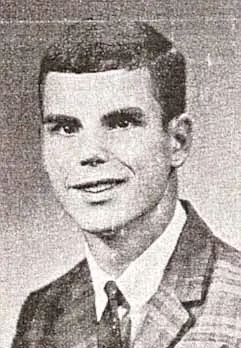
Had Hal Jackson (Grant, 1965) plotted a different course forward when he started running back in the ‘60s, he could be close to halfway to the moon by now. Or more realistically (given the dearth of celestial running infrastructure), Jackson might be nearing a fourth lap around the Earth.
1962 was the year Jackson, as a Grant freshman, first donned spikes for the Generals’ track team, and he’s been running ever since.
In four years at Grant he achieved enough to be considered by Oregon track coaching legend and PIL Hall of Famer Mark Cotton “one of the greatest distance runners in PIL history.” Then Jackson ran at the University of Oregon, where he may or may not have achieved All-American status (more on this later).
After graduating from college, he logged miles continuously over the course of his 30-year teaching and coaching career, during which he made the trip from his Alameda home to Milwaukie and Wilson high schools (about 9 miles in both cases) on foot at least once, and often twice, a week.
Jackson has finished five marathons and would run 100 to 120 miles a week training for each of them. Now in his late 70s, he still averages 3.5 miles daily, six days a week.
Start adding upall those miles -- and many more -- and pretty soon you’re talking real numbers.
“I’ve been tracking my workouts on calendars since 1965,” Jackson says. “I take one break a week but otherwise run daily, and at this point I estimate I’ve run about 90,000 miles. That sounds like a lot of miles, and it is, but it’s somewhat normal for people who’ve been running for many decades (he adds that former Duck teammate and NCAA steeplechase champion, Bruce Mortenson, has recorded more than 180,000 miles since 1962.) It’s all about consistency, motivation and certainly luck in avoiding injury.”
Jackson left "love of the sport" off his list but with 90,000 miles to his name, maybe that goes without saying?
Or maybe he was thinking about marathons when he made the comment. (“I didn’t consider marathons fun,” he says.) Whatever the case, he does add that running has indeed been fun since the day he first laced up his spikes at Grant.
Growing Up In Alameda
Before that happened, though, Jackson was just going about the businesss of being a kid growing up a short jog from the Alameda home he’s now lived in for 40 years. The Jackson household included his parents Harold and Jean; older sister, Linda, the 1963 Rose Festival Queen; and two brothers, Scott, who would follow Hal’s path to running stardom at Grant (and into the PIL Hall of Fame) and Doug, who was “quite a wrestler” for the Generals.
Other than playing Little League baseball, Jackson says he “didn’t do much sports-wise” while at Beaumont Grade School. But that wasn’t due to a personal energy shortage.
“In retrospect, I think I had some symptoms of undiagnosed ADHD,” he says. “And in grade school then there weren’t a lot of opportunities to play sports and burn off some of that excess energy. Once I started running in high school, that really helped.”
Here’s another thing that helped – being taught how to run by two of Oregon’s most respected high school track and field coaches, first Denny Sullivan, another PIL Hall of Famer, and then Cotton.
“They were both great coaches, great people and big influences on my life; they made running fun,” says Jackson.
Jackson enjoyed some early success in both cross country and track, which made running even more fun. By the time he graduated in 1965, he had a pair of 2-mile PIL championships and one 2-mile state title to his name. He also helped Grant teams win state championships in cross-country (1963 and 1964) and a track and field (1965).
“Having that success kept me interested in running,” Jackson says. “And it gave me confidence at a time when I didn’t have much.”
Bowerman Comes Calling
That success, especially the 2-mile state title he won as a junior, caught the attention of legendary Ducks coach Bill Bowerman, who was building a track power in Eugene that Jackson had followed since he started running and was hoping to one day be part of.
“Winning the state championship was a big deal for me; that’s when I started corresponding with Bowerman,” he says.
By his senior year, Jackson had a partial scholarship in hand to run cross country and track at UO (full rides in track weren’t a thing back then). But after the state track championships that spring, he wasn't sure he was going to be able to hang on to it.
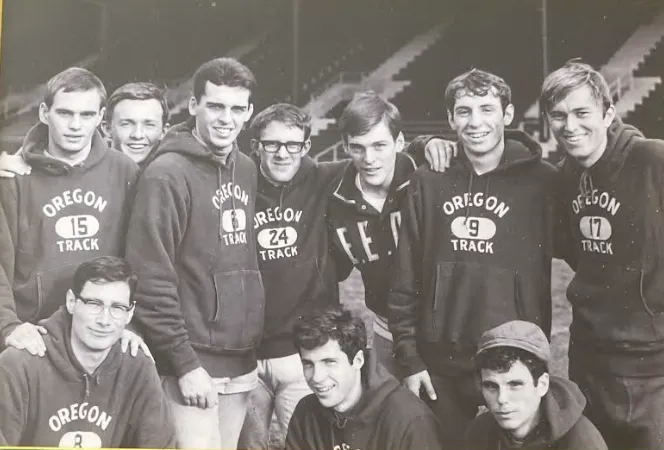
“My senior year, I lost the 2-mile at state by about three feet," he says. "It was pretty devastating, but Bowerman still honored my offer. So I went down there and had some of the best years of life.”
In his first year as a Duck, Jackson broke star runner and future sportswriter and author Kenny Moore’s 2-mile freshman record. (“I didn’t go on to enjoy the same fame as Kenny,” Jackson cracks.) But it wasn’t long before he decided, with Bowerman’s encouragement, to add a new, and completely unfamiliar, event to his running repertoire.
“My best time in the mile was 4:13, and there were eight guys in front of me who’d run four minutes or faster,” Jackson says. “So, I never competed in the mile at UO. But as everyone knows, Bill was a real innovator. One of the things he recognized was that one way to help a team win a national championship was to enter runners in the steeplechase. Not many guys wanted to run or coach the event, so he saw it as an opportunity to gather points.
"It’s a tough race that involves different conditioning, but I ran it because there weren’t a lot of other opportunities for me except for running the 3-mile and 6-mile. I did run those, but senior year I primarily ran steeplechase.”
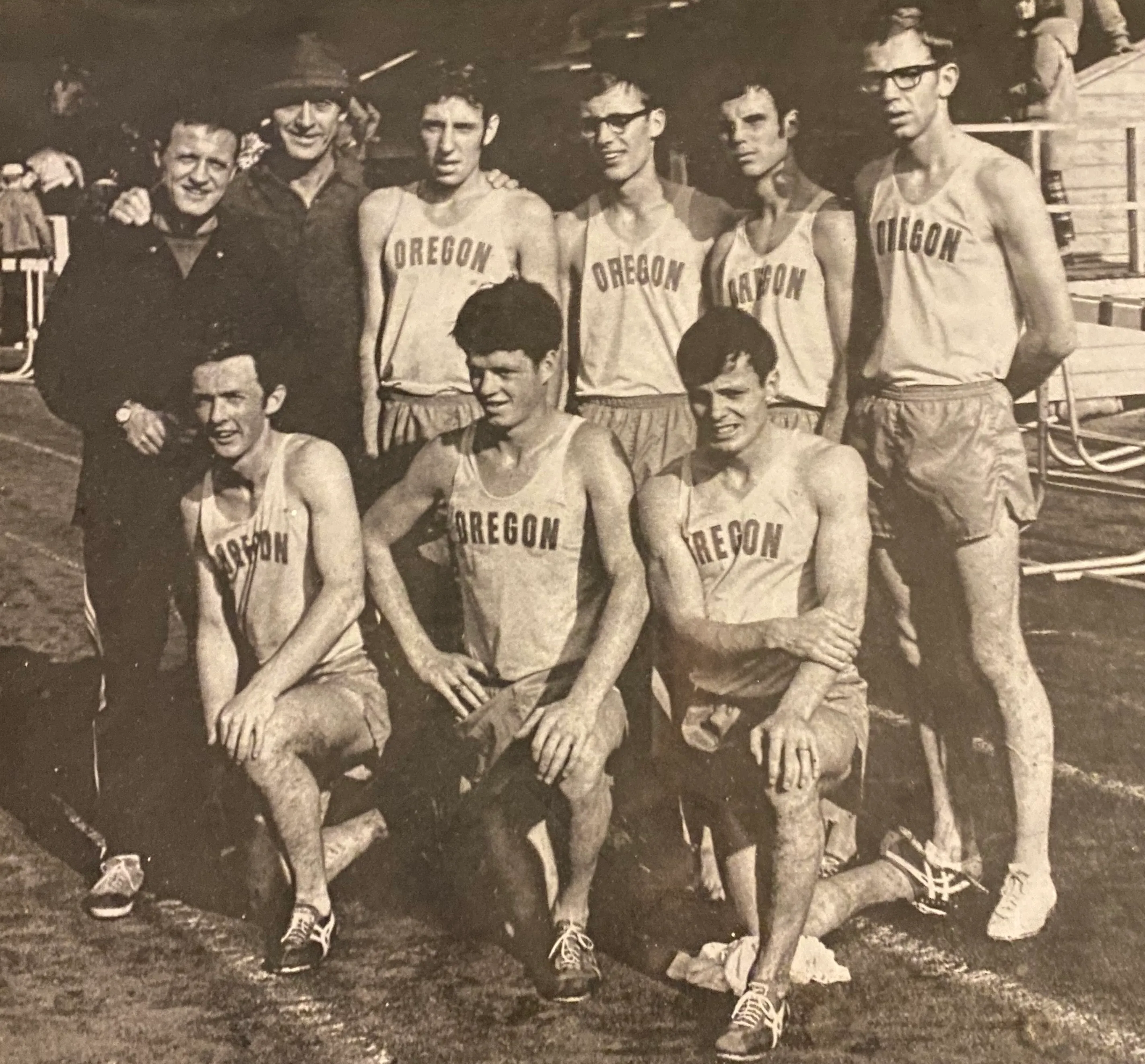
Jackson ran it well enough that year to add points to the Ducks’ team total in the NCAA Championships. Whether or not that made him an All-American, as his Cotton wrote when nominating his former prodigy for induction into the PIL Hall of Fame, is subject to debate – at least between the two friends.
“Mark says I placed 10th and that made me an All-American,” Jackson says before adding with a laugh. “I don’t want to question Mark, but I don’t know that I was an All-American. I did score points, though, so let’s keep it at that.”
Becoming a steeplechase…point scorer almost overnight is an example of what Jackson considers a mostly serendipitous life.
"In most cases, things have just sort of happened to me,” he says. "I've never been much of a planner."
Which is not to say he didn't occasionally try.
Serendipity Strikes Again
“After college, I decided I needed some adventure in my life," he says. "So in 1971 I was actually planning to go to Australia for a year to teach and coach,” he says.
At the time, Jackson was back in Portland waiting tables at John’s Meat Market, a then-happening restaurant and bar in Northwest Portland. But he’d secured his passport, bought a plane ticket to Australia and was “ready to go.”
Then, a few weeks before Jackson's departure date, serendipity walked in and took a seat at his table. Her name was Barbara, and soon Jackson had a decision to make.
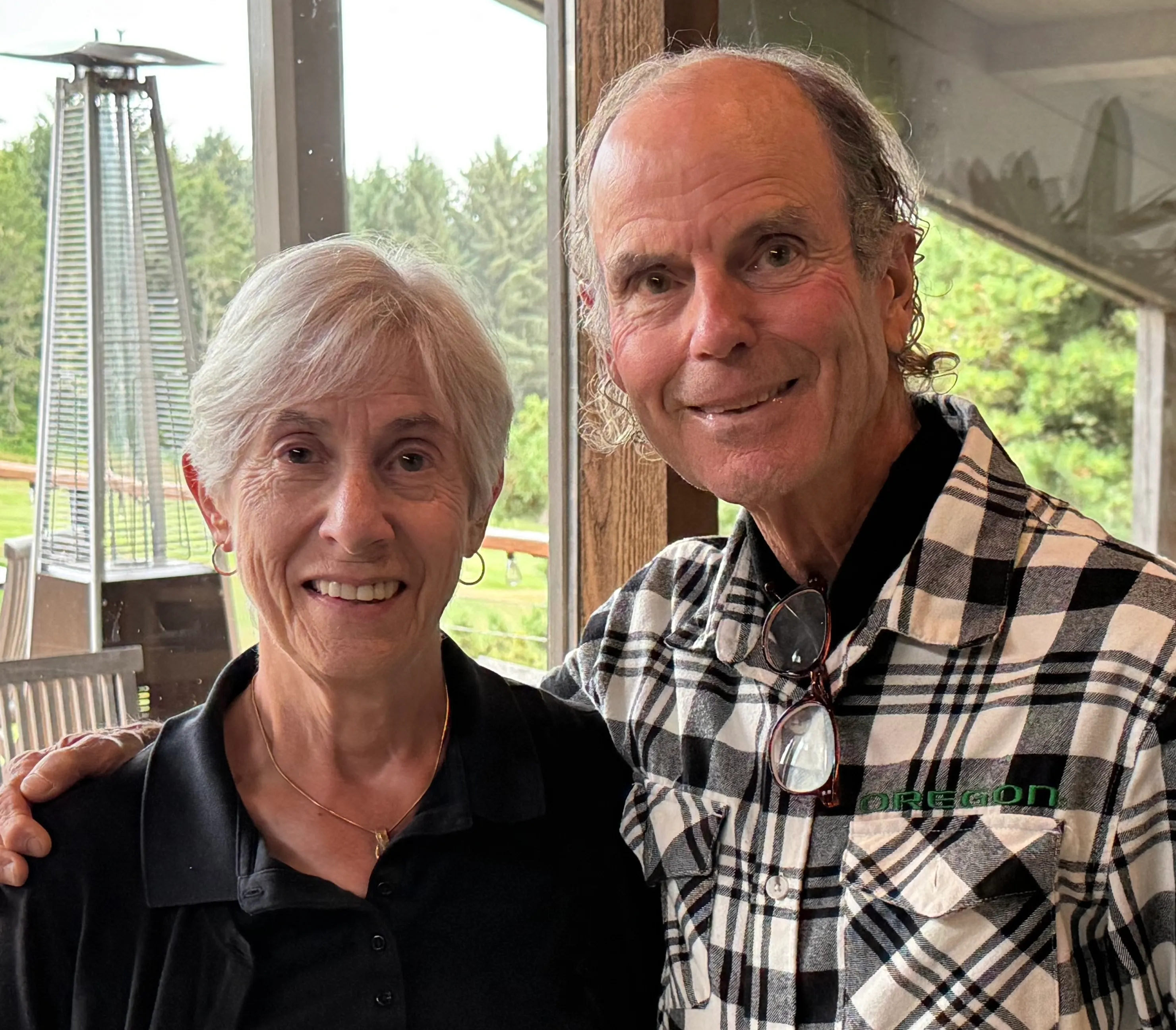
“I decided to stay, and it was a good decision since we’ve now been married 54 years,” he says, adding that he and Barbara have one daughter, Emily, who’s a teacher inLake Oswego. “But here I had actually planned on doing one thing and then something else happened. That’s kind of the way my life has gone.”
Another case in point – other than that one-year Australia plan that didn’t go as planned, Jackson had not intended to be a teacher until his mom called while he was still working at John’s and told him about a job opening at Milwaukie High.
Jackson tossed his application in the ring, and the rest is history – and geography, the subjects he taught while also coaching cross country and track at Milwaukie and then Wilson for a combined 31 years. After a brief retirement, Jackson returned to Grant to teach history (in the classroom next to the one where he’d taken history as a student) before retiring for good in 2002.
In the years since, he’s kept plenty busy golfing, tending to the extensive ornamental garden he’s been cultivating outside his Alameda home over the last 40 years and, of course, running.
“I’m pleased that after 64 years of running, I’m still able to do it pretty much daily,” he says. “I said that when I first started running the biggest benefit was the confidence it gave me. But as I ventured into adulthood and beyond, I’ve found it to be an activity that is often meditative, sometimes spiritual and just makes me feel good.”
Maybe not yet over the moon good but getting closer to it every day.
Do you know Hal Jackson? If you’d like to reconnect, he can be reached at [email protected]
Member Spotlight
Had Hal Jackson (Grant, 1965) plotted a different course forward when he started running back in the ‘60s, he could be close to halfway to the moon by now. Or more realistically (given the dearth of celestial running infrastructure), Jackson might be nearing a fourth lap around the Earth.
1962 was the year Jackson, as a Grant freshman, first donned spikes for the Generals’ track team, and he’s been running ever since.
In four years at Grant he achieved enough to be considered by Oregon track coaching legend and PIL Hall of Famer Mark Cotton “one of the greatest distance runners in PIL history.” Then Jackson ran at the University of Oregon, where he may or may not have achieved All-American status (more on this later).
After graduating from college, he logged miles continuously over the course of his 30-year teaching and coaching career, during which he made the trip from his Alameda home to Milwaukie and Wilson high schools (about 9 miles in both cases) on foot at least once, and often twice, a week.
Jackson has finished five marathons and would run 100 to 120 miles a week training for each of them. Now in his late 70s, he still averages 3.5 miles daily, six days a week.
Start adding upall those miles -- and many more -- and pretty soon you’re talking real numbers.
“I’ve been tracking my workouts on calendars since 1965,” Jackson says. “I take one break a week but otherwise run daily, and at this point I estimate I’ve run about 90,000 miles. That sounds like a lot of miles, and it is, but it’s somewhat normal for people who’ve been running for many decades (he adds that former Duck teammate and NCAA steeplechase champion, Bruce Mortenson, has recorded more than 180,000 miles since 1962.) It’s all about consistency, motivation and certainly luck in avoiding injury.”
Jackson left "love of the sport" off his list but with 90,000 miles to his name, maybe that goes without saying?
Or maybe he was thinking about marathons when he made the comment. (“I didn’t consider marathons fun,” he says.) Whatever the case, he does add that running has indeed been fun since the day he first laced up his spikes at Grant.
Growing Up In Alameda
Before that happened, though, Jackson was just going about the businesss of being a kid growing up a short jog from the Alameda home he’s now lived in for 40 years. The Jackson household included his parents Harold and Jean; older sister, Linda, the 1963 Rose Festival Queen; and two brothers, Scott, who would follow Hal’s path to running stardom at Grant (and into the PIL Hall of Fame) and Doug, who was “quite a wrestler” for the Generals.
Other than playing Little League baseball, Jackson says he “didn’t do much sports-wise” while at Beaumont Grade School. But that wasn’t due to a personal energy shortage.
“In retrospect, I think I had some symptoms of undiagnosed ADHD,” he says. “And in grade school then there weren’t a lot of opportunities to play sports and burn off some of that excess energy. Once I started running in high school, that really helped.”
Here’s another thing that helped – being taught how to run by two of Oregon’s most respected high school track and field coaches, first Denny Sullivan, another PIL Hall of Famer, and then Cotton.
“They were both great coaches, great people and big influences on my life; they made running fun,” says Jackson.
Jackson enjoyed some early success in both cross country and track, which made running even more fun. By the time he graduated in 1965, he had a pair of 2-mile PIL championships and one 2-mile state title to his name. He also helped Grant teams win state championships in cross-country (1963 and 1964) and a track and field (1965).
“Having that success kept me interested in running,” Jackson says. “And it gave me confidence at a time when I didn’t have much.”
Bowerman Comes Calling
That success, especially the 2-mile state title he won as a junior, caught the attention of legendary Ducks coach Bill Bowerman, who was building a track power in Eugene that Jackson had followed since he started running and was hoping to one day be part of.
“Winning the state championship was a big deal for me; that’s when I started corresponding with Bowerman,” he says.
By his senior year, Jackson had a partial scholarship in hand to run cross country and track at UO (full rides in track weren’t a thing back then). But after the state track championships that spring, he wasn't sure he was going to be able to hang on to it.
“My senior year, I lost the 2-mile at state by about three feet," he says. "It was pretty devastating, but Bowerman still honored my offer. So I went down there and had some of the best years of life.”
In his first year as a Duck, Jackson broke star runner and future sportswriter and author Kenny Moore’s 2-mile freshman record. (“I didn’t go on to enjoy the same fame as Kenny,” Jackson cracks.) But it wasn’t long before he decided, with Bowerman’s encouragement, to add a new, and completely unfamiliar, event to his running repertoire.
“My best time in the mile was 4:13, and there were eight guys in front of me who’d run four minutes or faster,” Jackson says. “So, I never competed in the mile at UO. But as everyone knows, Bill was a real innovator. One of the things he recognized was that one way to help a team win a national championship was to enter runners in the steeplechase. Not many guys wanted to run or coach the event, so he saw it as an opportunity to gather points.
"It’s a tough race that involves different conditioning, but I ran it because there weren’t a lot of other opportunities for me except for running the 3-mile and 6-mile. I did run those, but senior year I primarily ran steeplechase.”
Jackson ran it well enough that year to add points to the Ducks’ team total in the NCAA Championships. Whether or not that made him an All-American, as his Cotton wrote when nominating his former prodigy for induction into the PIL Hall of Fame, is subject to debate – at least between the two friends.
“Mark says I placed 10th and that made me an All-American,” Jackson says before adding with a laugh. “I don’t want to question Mark, but I don’t know that I was an All-American. I did score points, though, so let’s keep it at that.”
Becoming a steeplechase…point scorer almost overnight is an example of what Jackson considers a mostly serendipitous life.
"In most cases, things have just sort of happened to me,” he says. "I've never been much of a planner."
Which is not to say he didn't occasionally try.
Serendipity Strikes Again
“After college, I decided I needed some adventure in my life," he says. "So in 1971 I was actually planning to go to Australia for a year to teach and coach,” he says.
At the time, Jackson was back in Portland waiting tables at John’s Meat Market, a then-happening restaurant and bar in Northwest Portland. But he’d secured his passport, bought a plane ticket to Australia and was “ready to go.”
Then, a few weeks before Jackson's departure date, serendipity walked in and took a seat at his table. Her name was Barbara, and soon Jackson had a decision to make.
“I decided to stay, and it was a good decision since we’ve now been married 54 years,” he says, adding that he and Barbara have one daughter, Emily, who’s a teacher inLake Oswego. “But here I had actually planned on doing one thing and then something else happened. That’s kind of the way my life has gone.”
Another case in point – other than that one-year Australia plan that didn’t go as planned, Jackson had not intended to be a teacher until his mom called while he was still working at John’s and told him about a job opening at Milwaukie High.
Jackson tossed his application in the ring, and the rest is history – and geography, the subjects he taught while also coaching cross country and track at Milwaukie and then Wilson for a combined 31 years. After a brief retirement, Jackson returned to Grant to teach history (in the classroom next to the one where he’d taken history as a student) before retiring for good in 2002.
In the years since, he’s kept plenty busy golfing, tending to the extensive ornamental garden he’s been cultivating outside his Alameda home over the last 40 years and, of course, running.
“I’m pleased that after 64 years of running, I’m still able to do it pretty much daily,” he says. “I said that when I first started running the biggest benefit was the confidence it gave me. But as I ventured into adulthood and beyond, I’ve found it to be an activity that is often meditative, sometimes spiritual and just makes me feel good.”
Maybe not yet over the moon good but getting closer to it every day.
Do you know Hal Jackson? If you’d like to reconnect, he can be reached at [email protected]
More On This Hall of Famer
Read about their career and accomplishments on their HoF profile page.
Other Featured Members
We have a catalog of dozens of featured members of the month.