

Dave Gasser
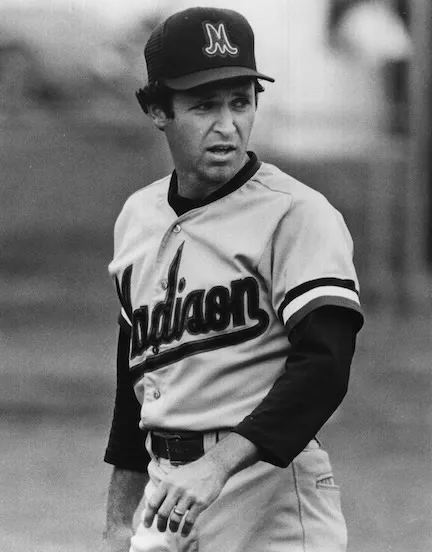
For a fellow who wound up winning more high school baseball games than any coach in Oregon history, Dave Gasser’s relationship to the sport sure got off to an inauspicious start.
The 1970 Madison graduate wasn’t exactly born into a baseball family. His father, Jack, was a professional musician and actor who played trumpet with the famed Doc Severinsen while in the Army (though he didn’t know it until after Johnny Carson made the Oregon-born musician famous). Gasser sums up his mother, Janet's, feelings about sports with a simple, but effective, “She hated P.E.”
But there were other sports influencers in young Gasser’s life. His grandfather, Al Zwald, who had been a good athlete at Franklin before having to drop out to work on his family’s dairy farm, would share copies of The Sporting News with his grandson, and the two spent a lot of Saturdays together watching the Major League Baseball Game of the Week called by Dizzy Dean and Peewee Reese.
Then there was the inescapable fact that Gasser grew up in the shadow of Madison where, he says, “If you could walk and chew gum you played Little League.”
Gasser could do both. But turning out for baseball at age 8 is one thing; looking like a kid destined for playing and coaching greatness is quite another.
“When I tried out for Little League, I was kind of surprised people were throwing overhand,” he says with a laugh. “That shows you how little I knew about youth baseball. Then my first game, it was rainy and cold, and I got hit with a pitch and I thought, Well, this is no fun. It was only at the end of the season, when I finally put a couple balls in play, that I figured out that getting a hit was a lot better than getting hit.”
It didn’t take Gasser long to figure out the rest of the game. He showed enough promise that the following year a coach encouraged him to skip another year of Little League minors and try out for majors, where he started playing with future Madison teammates.
Gasser’s love of the game grew the more he played and the more often he’d take in a Madison game. Watching the perennially strong Senators taught him how much a team could accomplish with good-to-great players brought up in an outstanding youth program and playing for excellent coaches.
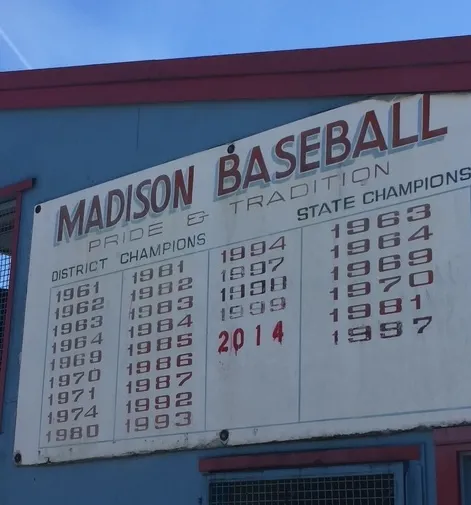
“Tom Wise and I became good friends at Gregory Heights Middle school and we were both in the stands watching his brother and future major leaguer, Rick, when Madison won its first state title in 1963,” Gasser remembers. “We grew up seeing what was possible in Little League and Babe Ruth and American Legion and at Madison. And I wanted to be part of that. So that became a real motivator to work hard to ensure I made the team, which was not easy at Madison. When I got there, 65 kids tried out for the freshman team.”
Gasser was a catcher which at Madison was a good news-bad news proposition. While he got to watch and learn behind future All-Stater and PIL Hall of Famer Bruce Maxwell, a year ahead of him, he had to wait until the American Legion season after his junior year, when Maxwell came down with mono, to become the Senators' starting backstop.
“For me to get my chance, I had to spend year and a half in the bullpen; I had to figure out my craft and get it to the point where I did it well enough to be a contributing member of an outstanding team,” he says.
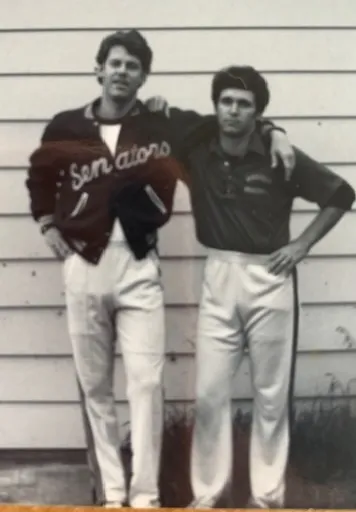
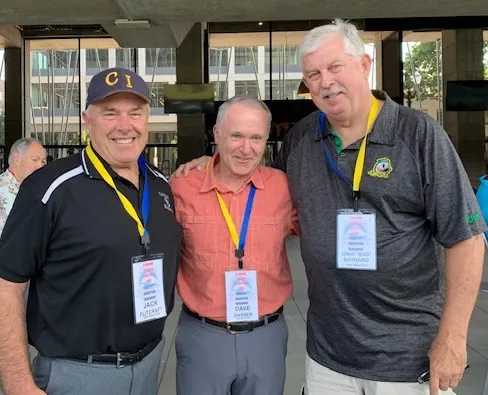
Playing alongside future PIL Hall of Famers (and in some instances, future pro players) who, besides Maxwell, included John Baynard, Rob Dressler, Jack Flitcraft, Steve Kebbe, Mark Quesinbery and Tom Wise, Gasser was a member of two PIL and state championship teams and, in the summer of 1969, a National Championship American Legion squad.
“We, and the guys before us, all grew up seeing teams after teams ahead of us winning, and when you see that you know it’s possible,” Gasser says. “When I went into coaching it was with an understanding and expectation of what you needed to work on developmentally in a youth baseball community and within a baseball structure to achieve that kind of success.”
Coaching Calls
Not long after Madison’s summer team, The Contractors, won the American Legion World Series, Gasser had an epiphany about his future.
“I couldn’t have been playing any better, but nobody (in pro baseball) was noticing a 5-8, 165-pound catcher,” he says. “I realized if I wanted to stay in baseball, I was going to need to coach.”
After Madison, Gasser attended Portland State for a year before transferring to Oregon College of Education after being introduced to the school by a childhood friend looking for a roommate. In 1975, with degree in hand, Gasser landed his first teaching job at Canby, a position that also came with what he calls “the coveted seventh-grade football and baseball coaching jobs.” He spent the next year coaching Canby High’s JV baseball team before taking over as varsity coach for his final two years.
Gasser says his coaching goals were pretty simple.
“My job was always to help the kids grow, like I had to grow when I played,” he says. “At Madison, I was lucky to have played with guys and in a culture that set the bar really high. That was my normal. I’d learned that the guys that could play catch better and the guys who could hit between the lines better won. So that became my template.”
After four years at Canby, Gasser got a call from his former Madison coach, Dick McClain, telling him the varsity baseball coaching job was open at his alma mater and suggesting he might want to make a call to the school’s athletic director, Bill Wiitala.
“I wasn’t about to not pursue that,” says Gasser, who wound up competing for the job against several more experienced coaches, including a guy named Tom Treblehorn, who in a few years would be managing the Milwaukee Brewers.
“I didn’t think I had a prayer,” Gasser says. “But Bill picked me, and the rest is history.”
History, and a lot of it. Between 1979 and 1990, he led the Senators to eight straight PIL championships and, in 1981, the first of five state titles Gasser would collect at Madison and two future coaching stops.
Along the way, Gasser was constantly seeking opportunities to mine baseball coaching gold from the most knowledgeable brains in the business.
“In terms of player development, there were experienced coaches around me doing a better a job than me,” he says. “So I kept a notebook with the names of coaches I wanted to talk with. I was thinking, I’ve gotta sit down with Jack Dunn and talk strategy. I need to talk to Joe Brock at Stayton about base running. Bill Wiitala (who won two state titles at Madison) was my athletic director, and I could sit down and talk with him whenever I had questions. I’m indebted to him and Dick McClain who were my first mentors.
Time to Move On
By 1990, Gasser was ready for a move from Madison and, possibly, away from coaching baseball altogether. In fact, he says, when he landed a social studies teaching job at Lakeridge, he didn’t even let on that he had spent the last 12 years coaching a baseball powerhouse at Madison.
His first year, Gasser did wind up being an assistant football coach before accepting a late request to coach the freshman baseball team. But at the end of the season, when he was offered the varsity baseball job, Gasser wasn’t sure he wanted it.
“The program was coming off a rough year, and I wasn't sure how a Northeast Portland guy would fit in with Lakeridge athletes,” he says.
Gasser decided to give it a go and went to work finding the players willing to buy into his system, building his summer program and improving the school’s baseball facilities. And in 1995, Lakeridge won its first-ever league title and made it to the state semifinals.
“Then it took off, and we had a real good run,” Gasser says.
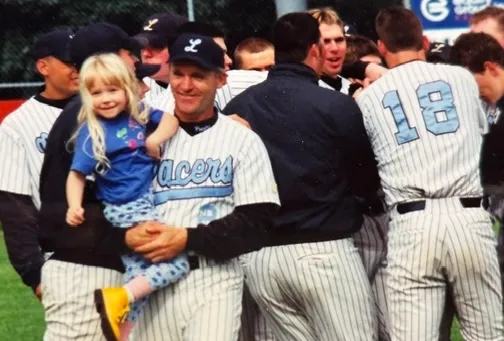
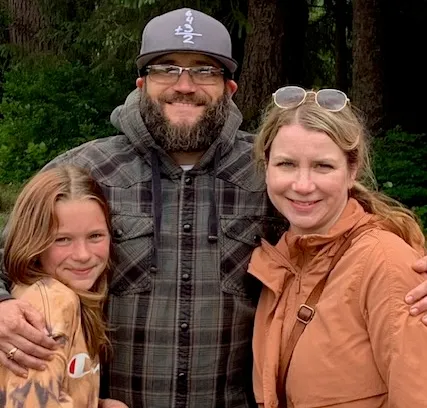
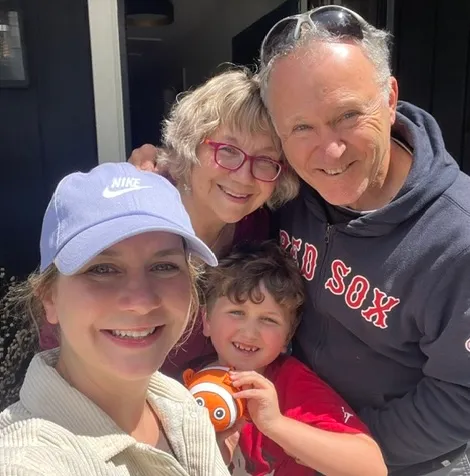
In 11 years at Lakeridge, Gasser’s teams won four league championships and state titles in 1999 and 2001. Among his many highlights was getting to coach his son, Aaron. (Gasser and his wife of 52 years, Vicki, also have a daughter, Kindra, and four grandchildren.)
So Much For Retirement
In 2002, after 25 varisty seasons, Gasser retired from coaching. Three years later, he left the classroom after teaching for 31 years and, at age 53, moved with Vicki to her hometown of Astoria, where a few years arlier they had purchased and renovated their retirement home.
At that point, he assumed he had left coaching behind. But best-laid plans only work if an old acquaintance, who happens to be the local high school principal, doesn’t find out you’re in town. That’s how highly successful, retired baseball coaches can wind up getting offers to unretire.
“My initial thought was, Are you kidding me?,” Gasser remembers. “This is the worst weather I’ve ever seen. The facilities are horrendous. The baseball field couldn’t take water. The uniforms looked like bowling outfits. Who in their right mind would coach here?’”
Two months later, Gasser had answered his own question.
“I started to meet the kids and community members, and they were awesome,” he says. “To say they were hungry for a good baseball program was an understatement.”
It also didn’t hurt when Gasser drove by the field one day and saw a kid out practicing baseball drills by himself. He wheeled his vehicle around, walked onto the field and asked for his name and age.
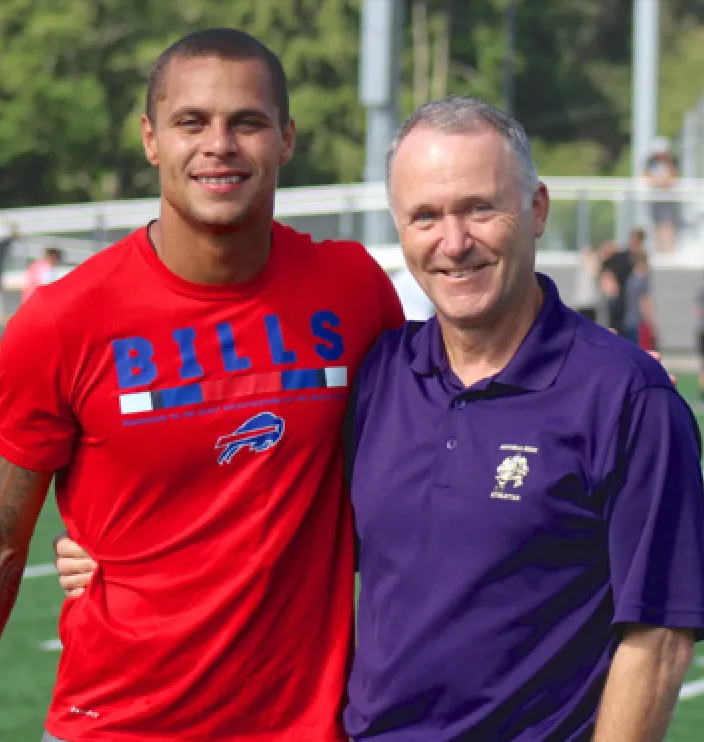
That’s when Gasser learned that for the next four years he’d be coaching a one-of-a-kind athlete and future NFL All-Pro. “He told me he was 13 his name was Jordan Poyer,” Gasser says. “I’ve never seen another athlete like him.”
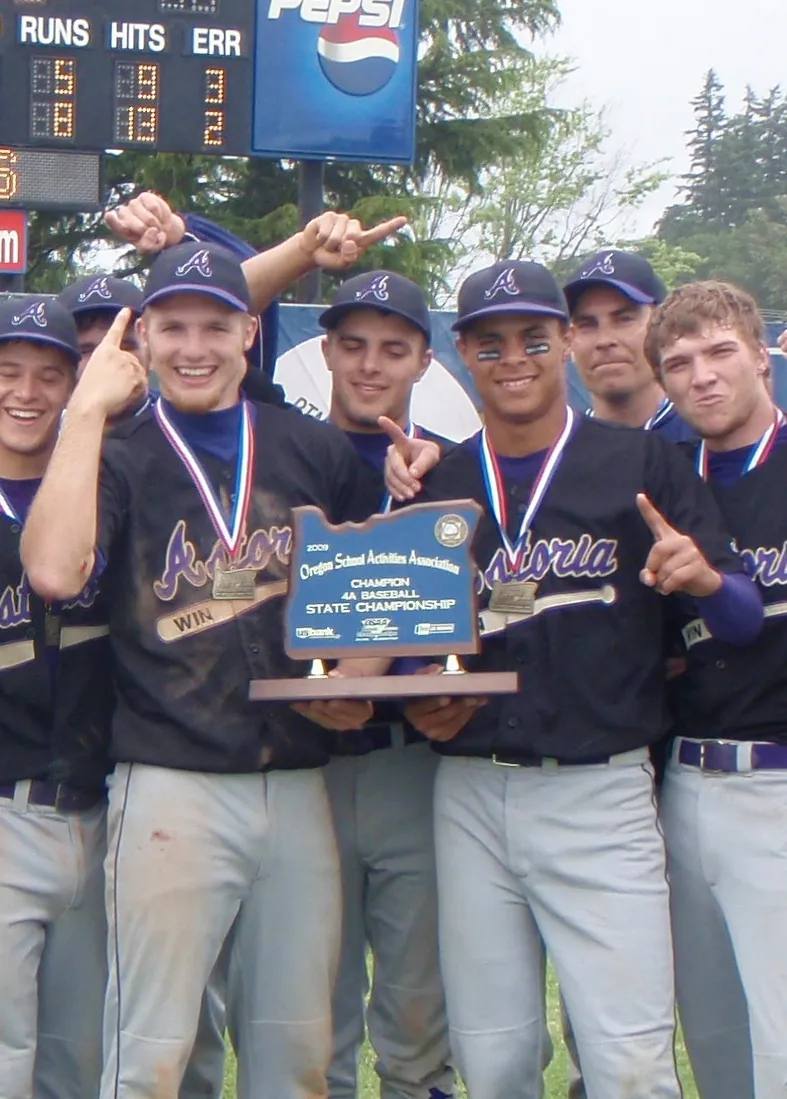
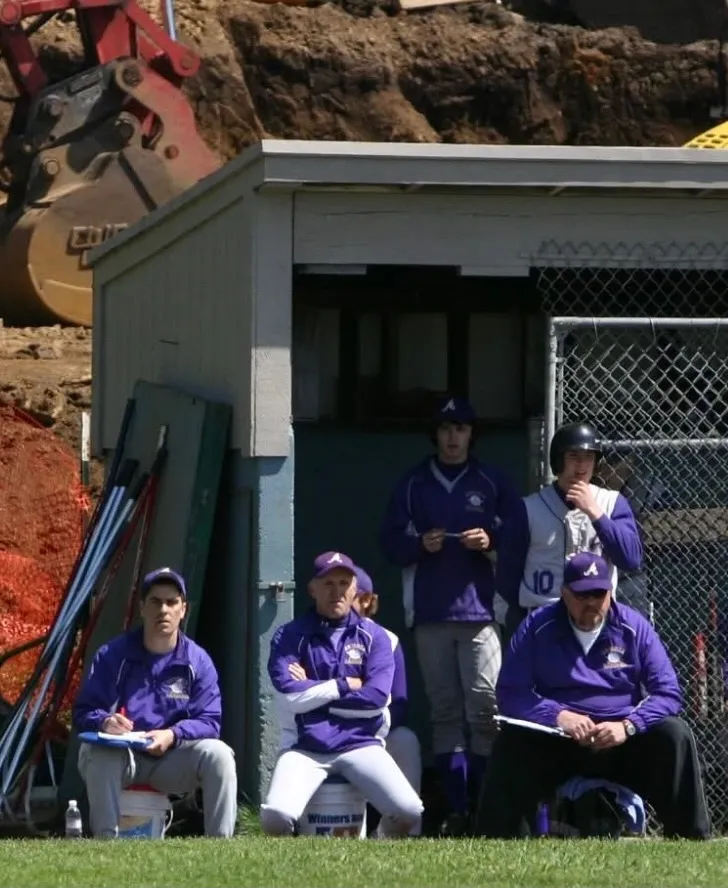
With Poyer in his first lineup, the Fishermen won a state title in 2006 and again in 2009 before taking second in 2010. Gasser stepped down to assume an assistant role in 2011 when the Fisherman won their third title in five years, but in 2013 he was lured back to the skipper’s seat before retiring once and for all in 2017.
More Than Just a Coach
Gasser coaching career included those five state titles, the most wins in Oregon history (and a career record of 750-235), more honors than you can shake a hickory stick at (he's a member of the Oregon Sports and Oregon Baseball Coaches halls of fame, in addition to the PIL's), and the undying loyalty of scores of grateful players.
One of those is Kyle Johnson, a 2006 Astoria High graduate and athlete who, in a 2010 article published in The Daily Astorian, wrote a tribute to his former coach that included the following:
“While winning a state title my senior year will always be the greatest sports accomplishment of my life, knowing that I am a better person having played for Gasser is every bit as meaningful as the state championship ring I own.
"It’s more than just winning baseball games that makes him the respected person he is. He changed the way I look at life. No one expected us to win a state championship my senior year, but coach Gasser believed in my teammates and me, pushed us to work hard every day and never doubted us for a second.
"It’s unfortunate that every high school baseball player doesn’t get the chance to play for a guy like Dave Gasser, because more than being the best baseball coach in Oregon high school history, he’s one of the best life coaches any young man could ask for.”
Do you know Dave Gasser? If you'd like to reconnect, he can be reached at [email protected]

Member Spotlight
For a fellow who wound up winning more high school baseball games than any coach in Oregon history, Dave Gasser’s relationship to the sport sure got off to an inauspicious start.
The 1970 Madison graduate wasn’t exactly born into a baseball family. His father, Jack, was a professional musician and actor who played trumpet with the famed Doc Severinsen while in the Army (though he didn’t know it until after Johnny Carson made the Oregon-born musician famous). Gasser sums up his mother, Janet's, feelings about sports with a simple, but effective, “She hated P.E.”
But there were other sports influencers in young Gasser’s life. His grandfather, Al Zwald, who had been a good athlete at Franklin before having to drop out to work on his family’s dairy farm, would share copies of The Sporting News with his grandson, and the two spent a lot of Saturdays together watching the Major League Baseball Game of the Week called by Dizzy Dean and Peewee Reese.
Then there was the inescapable fact that Gasser grew up in the shadow of Madison where, he says, “If you could walk and chew gum you played Little League.”
Gasser could do both. But turning out for baseball at age 8 is one thing; looking like a kid destined for playing and coaching greatness is quite another.
“When I tried out for Little League, I was kind of surprised people were throwing overhand,” he says with a laugh. “That shows you how little I knew about youth baseball. Then my first game, it was rainy and cold, and I got hit with a pitch and I thought, Well, this is no fun. It was only at the end of the season, when I finally put a couple balls in play, that I figured out that getting a hit was a lot better than getting hit.”
It didn’t take Gasser long to figure out the rest of the game. He showed enough promise that the following year a coach encouraged him to skip another year of Little League minors and try out for majors, where he started playing with future Madison teammates.
Gasser’s love of the game grew the more he played and the more often he’d take in a Madison game. Watching the perennially strong Senators taught him how much a team could accomplish with good-to-great players brought up in an outstanding youth program and playing for excellent coaches.
“Tom Wise and I became good friends at Gregory Heights Middle school and we were both in the stands watching his brother and future major leaguer, Rick, when Madison won its first state title in 1963,” Gasser remembers. “We grew up seeing what was possible in Little League and Babe Ruth and American Legion and at Madison. And I wanted to be part of that. So that became a real motivator to work hard to ensure I made the team, which was not easy at Madison. When I got there, 65 kids tried out for the freshman team.”
Gasser was a catcher which at Madison was a good news-bad news proposition. While he got to watch and learn behind future All-Stater and PIL Hall of Famer Bruce Maxwell, a year ahead of him, he had to wait until the American Legion season after his junior year, when Maxwell came down with mono, to become the Senators' starting backstop.
“For me to get my chance, I had to spend year and a half in the bullpen; I had to figure out my craft and get it to the point where I did it well enough to be a contributing member of an outstanding team,” he says.
Playing alongside future PIL Hall of Famers (and in some instances, future pro players) who, besides Maxwell, included John Baynard, Rob Dressler, Jack Flitcraft, Steve Kebbe, Mark Quesinbery and Tom Wise, Gasser was a member of two PIL and state championship teams and, in the summer of 1969, a National Championship American Legion squad.
“We, and the guys before us, all grew up seeing teams after teams ahead of us winning, and when you see that you know it’s possible,” Gasser says. “When I went into coaching it was with an understanding and expectation of what you needed to work on developmentally in a youth baseball community and within a baseball structure to achieve that kind of success.”
Coaching Calls
Not long after Madison’s summer team, The Contractors, won the American Legion World Series, Gasser had an epiphany about his future.
“I couldn’t have been playing any better, but nobody (in pro baseball) was noticing a 5-8, 165-pound catcher,” he says. “I realized if I wanted to stay in baseball, I was going to need to coach.”
After Madison, Gasser attended Portland State for a year before transferring to Oregon College of Education after being introduced to the school by a childhood friend looking for a roommate. In 1975, with degree in hand, Gasser landed his first teaching job at Canby, a position that also came with what he calls “the coveted seventh-grade football and baseball coaching jobs.” He spent the next year coaching Canby High’s JV baseball team before taking over as varsity coach for his final two years.
Gasser says his coaching goals were pretty simple.
“My job was always to help the kids grow, like I had to grow when I played,” he says. “At Madison, I was lucky to have played with guys and in a culture that set the bar really high. That was my normal. I’d learned that the guys that could play catch better and the guys who could hit between the lines better won. So that became my template.”
After four years at Canby, Gasser got a call from his former Madison coach, Dick McClain, telling him the varsity baseball coaching job was open at his alma mater and suggesting he might want to make a call to the school’s athletic director, Bill Wiitala.
“I wasn’t about to not pursue that,” says Gasser, who wound up competing for the job against several more experienced coaches, including a guy named Tom Treblehorn, who in a few years would be managing the Milwaukee Brewers.
“I didn’t think I had a prayer,” Gasser says. “But Bill picked me, and the rest is history.”
History, and a lot of it. Between 1979 and 1990, he led the Senators to eight straight PIL championships and, in 1981, the first of five state titles Gasser would collect at Madison and two future coaching stops.
Along the way, Gasser was constantly seeking opportunities to mine baseball coaching gold from the most knowledgeable brains in the business.
“In terms of player development, there were experienced coaches around me doing a better a job than me,” he says. “So I kept a notebook with the names of coaches I wanted to talk with. I was thinking, I’ve gotta sit down with Jack Dunn and talk strategy. I need to talk to Joe Brock at Stayton about base running. Bill Wiitala (who won two state titles at Madison) was my athletic director, and I could sit down and talk with him whenever I had questions. I’m indebted to him and Dick McClain who were my first mentors.
Time to Move On
By 1990, Gasser was ready for a move from Madison and, possibly, away from coaching baseball altogether. In fact, he says, when he landed a social studies teaching job at Lakeridge, he didn’t even let on that he had spent the last 12 years coaching a baseball powerhouse at Madison.
His first year, Gasser did wind up being an assistant football coach before accepting a late request to coach the freshman baseball team. But at the end of the season, when he was offered the varsity baseball job, Gasser wasn’t sure he wanted it.
“The program was coming off a rough year, and I wasn't sure how a Northeast Portland guy would fit in with Lakeridge athletes,” he says.
Gasser decided to give it a go and went to work finding the players willing to buy into his system, building his summer program and improving the school’s baseball facilities. And in 1995, Lakeridge won its first-ever league title and made it to the state semifinals.
“Then it took off, and we had a real good run,” Gasser says.
In 11 years at Lakeridge, Gasser’s teams won four league championships and state titles in 1999 and 2001. Among his many highlights was getting to coach his son, Aaron. (Gasser and his wife of 52 years, Vicki, also have a daughter, Kindra, and four grandchildren.)
So Much For Retirement
In 2002, after 25 varisty seasons, Gasser retired from coaching. Three years later, he left the classroom after teaching for 31 years and, at age 53, moved with Vicki to her hometown of Astoria, where a few years arlier they had purchased and renovated their retirement home.
At that point, he assumed he had left coaching behind. But best-laid plans only work if an old acquaintance, who happens to be the local high school principal, doesn’t find out you’re in town. That’s how highly successful, retired baseball coaches can wind up getting offers to unretire.
“My initial thought was, Are you kidding me?,” Gasser remembers. “This is the worst weather I’ve ever seen. The facilities are horrendous. The baseball field couldn’t take water. The uniforms looked like bowling outfits. Who in their right mind would coach here?’”
Two months later, Gasser had answered his own question.
“I started to meet the kids and community members, and they were awesome,” he says. “To say they were hungry for a good baseball program was an understatement.”
It also didn’t hurt when Gasser drove by the field one day and saw a kid out practicing baseball drills by himself. He wheeled his vehicle around, walked onto the field and asked for his name and age.
That’s when Gasser learned that for the next four years he’d be coaching a one-of-a-kind athlete and future NFL All-Pro. “He told me he was 13 his name was Jordan Poyer,” Gasser says. “I’ve never seen another athlete like him.”
With Poyer in his first lineup, the Fishermen won a state title in 2006 and again in 2009 before taking second in 2010. Gasser stepped down to assume an assistant role in 2011 when the Fisherman won their third title in five years, but in 2013 he was lured back to the skipper’s seat before retiring once and for all in 2017.
More Than Just a Coach
Gasser coaching career included those five state titles, the most wins in Oregon history (and a career record of 750-235), more honors than you can shake a hickory stick at (he's a member of the Oregon Sports and Oregon Baseball Coaches halls of fame, in addition to the PIL's), and the undying loyalty of scores of grateful players.
One of those is Kyle Johnson, a 2006 Astoria High graduate and athlete who, in a 2010 article published in The Daily Astorian, wrote a tribute to his former coach that included the following:
“While winning a state title my senior year will always be the greatest sports accomplishment of my life, knowing that I am a better person having played for Gasser is every bit as meaningful as the state championship ring I own.
"It’s more than just winning baseball games that makes him the respected person he is. He changed the way I look at life. No one expected us to win a state championship my senior year, but coach Gasser believed in my teammates and me, pushed us to work hard every day and never doubted us for a second.
"It’s unfortunate that every high school baseball player doesn’t get the chance to play for a guy like Dave Gasser, because more than being the best baseball coach in Oregon high school history, he’s one of the best life coaches any young man could ask for.”
Do you know Dave Gasser? If you'd like to reconnect, he can be reached at [email protected]
More On This Hall of Famer
Read about their career and accomplishments on their HoF profile page.
Other Featured Members
We have a catalog of dozens of featured members of the month.