

Cindy Brown
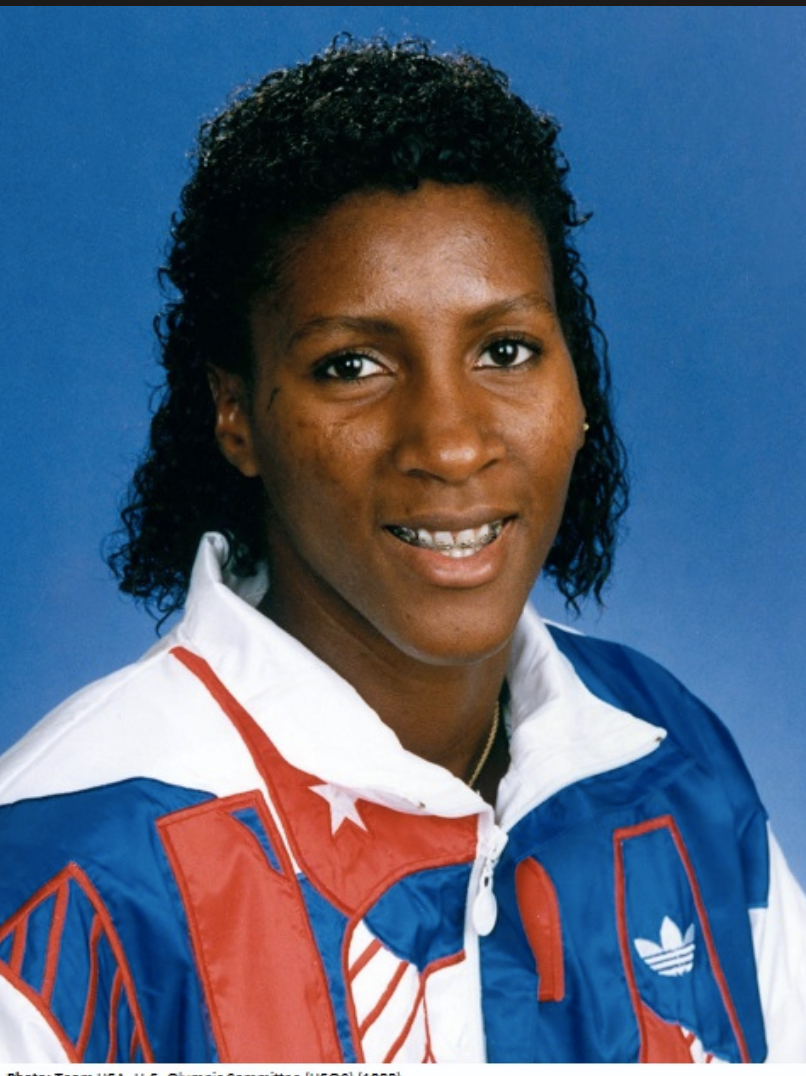
She lives in San Diego now and has been away from Portland for years. Still it saddens Cindy Brown (Grant, 1983) to learn one of her hometown’s landmarks and a favorite childhood haunt is gone.
Growing up on N.E. Siskiyou Street, Brown spent countless hours at Lloyd Center, the nearby shopping mall that opened a handful of years before she was born.
“My friends and I ice skated there all the time; that’s what kept us out of trouble,” Brown says with a laugh. “It was 11 blocks from my house, and we’d walk down to skate so often that the workers all knew us by name. It was a community of kids.”
Hailed when it opened in 1960 as a groundbreaking, ultra-modern, shopping experience, Lloyd Center closed Aug. 8 (2026), bringing an end to the ice skating but not to Brown’s fond memories of it. That’s despite the fact she piled so many other future fond memories on top of them over the course of her life and basketball career, which ranks among the most acclaimed in Oregon history (she was No. 5 on The Oregonian/Oregon Live’s 2026 list of “The 100 greatest girls athletes in Oregon high school sports history”).
On her own list of things to be sad about, the Lloyd Center’s closure, unfortunately, likely doesn’t even crack Brown’s top (or bottom) 100. But while she has experienced far more than a fair share of heartache (more on this later), that hasn’t lowered the wattage of her electric personality and wicked sense of humor.
Her sister, Brenda, can attest to that. She's on the receiving end of a lot Brown's wisecracks, not only in a recent conversation but, from the sounds of things, maybe for as long as Brown has been able to talk. For example:
“When we were kids, we’d always argue about how much older she was than me. I’d say it was three and a half years, which it was. But she’d round it up to four. These days as far as I’m concerned, it’s a solid four,” Brown says with a laugh.
Jokes aside, anyone searching for the source of Brown’s competitive nature, a key to her athletic success, might want to start with Brenda. Because while Brown is quick to credit a long list of coaches and teammates who helped and influenced her over the years, no name gets mentioned more than her sister’s.
"Brenda pounded on me when I was younger. I'd try so hard to beat her but couldn't do it. I'd say, 'One day I'll be bigger than you' and she'd say, 'You'll never be bigger.'"
Imagine Brenda's surprise (and, likely, disappointment) when "little" sister was already towering over her by sixth grade. Brown is still gleeful when she recounts the story. "I shot up to six feet," and she was, like, 5-8. And in high school," she says with a laugh."
Before long, Brown was playing in the Albina Sports Program, getting guidance in both basketball and life from Phil and Carol Walden, while also participating in a national youth program at Concordia College.
“They helped us kids hone our skills but also kept us from getting into mischief,” she says. “We learned how to be responsible and how to work with others. They helped teach us the right ways to go about things.”
Away from those programs, Brown continued to attend classes led by Professor Brenda.
“Every day she would take me to Irvington Park and we’d play Crunch, which they call 21 now,” Brown says. “And she’d beat the tar off me. I’d get so mad. But I was getting coaching at the same time and I was figuring out how to use my height and strength to take her to the bucket.”
Basketball and Fish Filets
Brown entered Grant, “a frail little freshman. I was tall but probably weighed a buck 25, so I didn’t have much weight to throw around and didn’t really know what I was able to do.”
She’d figure it out – and have a great time in the process. Brown says “every year at Grant was progressively more awesome,” a statement that covers her own growth, the success of the teams she played on and her entire high school experience.
Grant never won a state title during Brown’s stay, but took second her senior year which, she says, “was almost like first, because we’d never gotten that far before.”
Throughout high school Brown was developing a reputation that spread nationally after she was named a Parade All-American her junior and senior years. She would leave Grant as the all-time leading scorer among players from Oregon’s large high schools and ranked as the nation’s third-best player.
Despite all that sports success, many of Brown’s favorite memories are from off the court. Her parents, Emanuel and Addie Lee, had always stressed to Cindy, Brenda and their older brother, Gregory, the importance of not growing up too fast.
“Mom used to say, ‘Stay a kid as long as you can. Don’t get into old folks’ business,’” Brown remembers.
Brown took that advice to heart as long as she could, and has plenty of stories that prove she succeeded. Like this one:
“Every day Mom would put a dollar-50 on the table for my lunch,” Brown recalls. “But I didn’t use it for lunch. I saved it for after practice when a lot of us (players) would take the No. 15 bus downtown to McDonald’s. I would order a filet-o-fish sandwich with double cheese, extra tartar source and a vanilla shake, and my order never changed. Even to this day. But it’s a long ways from $1.50 now.”
When it was time to choose a college, Brown had her pick of the entire NCAA but quickly narrowed her list to women’s basketball powerhouses Long Beach State and USC.
“I was leaning toward USC, but my conversations with the Long Beach coaches came down to did I want to play in the shadow of Cheryl Miller (who had just led USC to the ’83 national championship) or did I want to create Cindy Brown? And I was like, Well, creating the Cindy thing sounds nice, but an NCAA championship would be nice, too,” Brown says with another big laugh.
Brown chose Long Beach where from 1983 to 1987 she evolved into an impressive 2.0 version of herself. She averaged 21 points and nine rebounds over her career, helping her teams compile a 117-15 record while being named Big West Conference Player of the Year in 1986 and All-American in 1986 and 1987.
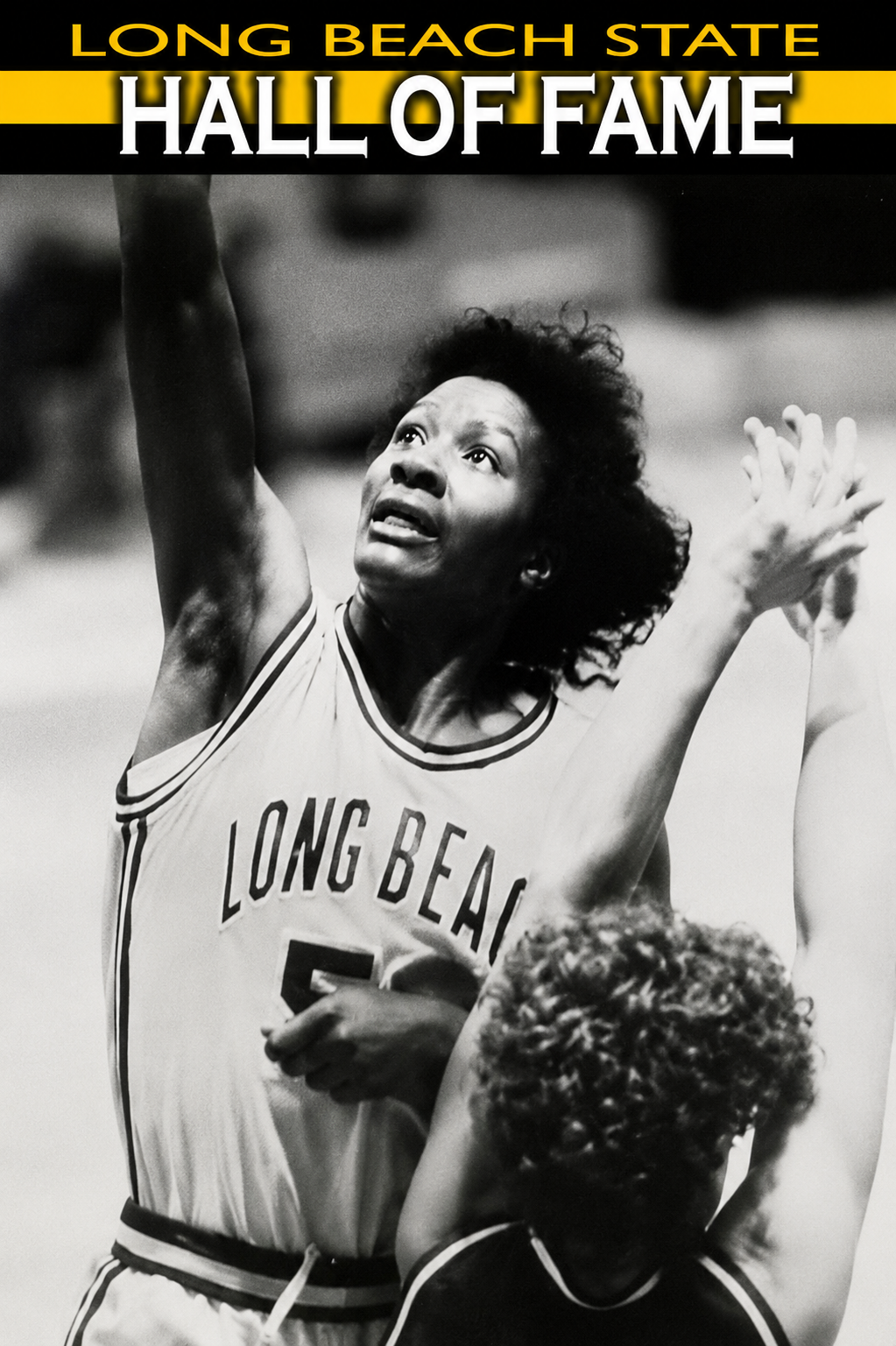
As a senior, Brown set one NCAA record by scoring 60 points in a win over San Jose State and another for most points in a season (974). That year, Brown also came this close to the NCAA title she was hoping for when Long Beach made the Final Four and she made the All-Tournament team.
Although Brown’s single-game scoring record has been broken, there’s a part of her – the funny part – that will never accept that it has.
“I will always dispute that,” she says with a laugh. “I only played the first three quarters of that game, and there wasn’t a three-point line then. I could have scored a hundred if there was and if I played a whole game.”
Then Brown quickly turns serious and credits her teammates’ defense and passing as the reasons for her record-setting night.
Brown left Long Beach as the school's all-time leader in rebounds, blocks and steals and is second in points scored.
From Olympian to WNBA Pioneer
In addition to her success at Long Beach State, Brown played on multiple national teams during and after her college career, including the gold medal-winning U.S. teams in the 1985 World University Games, 1986 World Championships, 1987 Pan American Games and 1988 Olympics in Seoul. She also played for the U.S. in the 1986 FIBA World Championships in Moscow.
After finishing her distinguished amateur career, Brown played professionally in Japan, Spain, France and Israel before the WNBA lured her back to the U.S. in 1998.
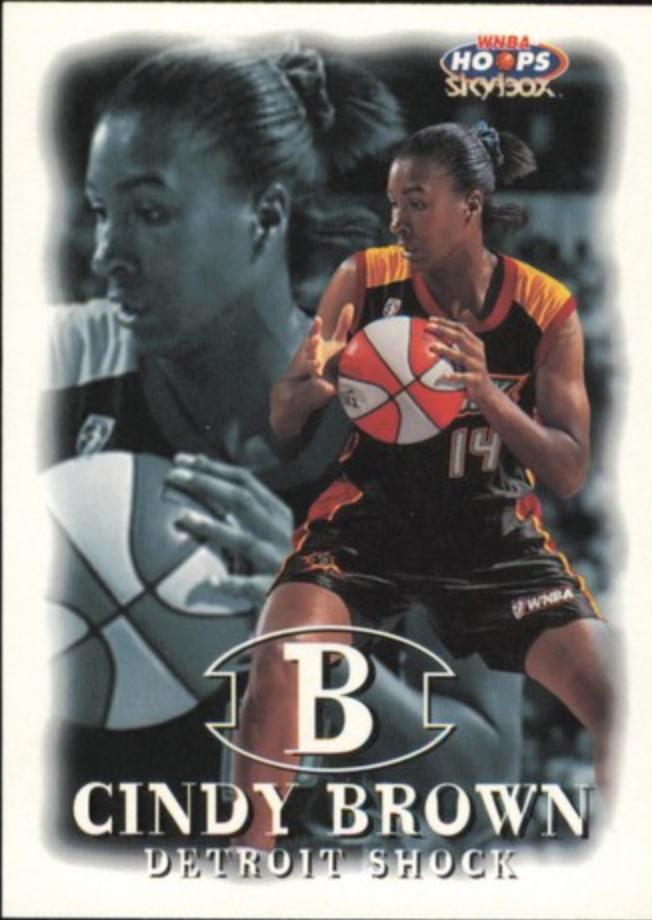
“I came home, not for the pay, which was awful, but for the experience, which turned out to be wonderful,” she says. “We were pioneers of the sport (the WNBA had been founded only two years earlier), and we put our personal goals aside to help ensure the league would be available for girls in the future. It was rewarding to be part of that.”
In 1998, Brown made the All-WNBA second team while playing for Detroit, then retired from basketball after the next year, which ended with her playing for Utah.
“Both of my parents died around that time, and I just couldn’t get into the right mental state to continue playing,” she says. “I lost my fight and competitiveness.”
Brown has spent the years since working in criminal justice, advocating for people with disabilities and drug dependencies, unhoused individuals and others to ensure they have access to the assistance, protections and opportunities available to them.
In 2020, Brown’s own life took a horrible turn when she was the victim of identity theft and mortgage fraud,, which resulted in a SWAT team raiding and taking possession of her home. She never got it back.
“You can find the story online, but what happened to me was horrifying and unlawful,” she says. “That’s why I’m trying to help so many people. I lost everything, but sports and life teach us survival skills, and I’m improving every day.”
Member Spotlight
She lives in San Diego now and has been away from Portland for years. Still it saddens Cindy Brown (Grant, 1983) to learn one of her hometown’s landmarks and a favorite childhood haunt is gone.
Growing up on N.E. Siskiyou Street, Brown spent countless hours at Lloyd Center, the nearby shopping mall that opened a handful of years before she was born.
“My friends and I ice skated there all the time; that’s what kept us out of trouble,” Brown says with a laugh. “It was 11 blocks from my house, and we’d walk down to skate so often that the workers all knew us by name. It was a community of kids.”
Hailed when it opened in 1960 as a groundbreaking, ultra-modern, shopping experience, Lloyd Center closed Aug. 8 (2026), bringing an end to the ice skating but not to Brown’s fond memories of it. That’s despite the fact she piled so many other future fond memories on top of them over the course of her life and basketball career, which ranks among the most acclaimed in Oregon history (she was No. 5 on The Oregonian/Oregon Live’s 2026 list of “The 100 greatest girls athletes in Oregon high school sports history”).
On her own list of things to be sad about, the Lloyd Center’s closure, unfortunately, likely doesn’t even crack Brown’s top (or bottom) 100. But while she has experienced far more than a fair share of heartache (more on this later), that hasn’t lowered the wattage of her electric personality and wicked sense of humor.
Her sister, Brenda, can attest to that. She's on the receiving end of a lot Brown's wisecracks, not only in a recent conversation but, from the sounds of things, maybe for as long as Brown has been able to talk. For example:
“When we were kids, we’d always argue about how much older she was than me. I’d say it was three and a half years, which it was. But she’d round it up to four. These days as far as I’m concerned, it’s a solid four,” Brown says with a laugh.
Jokes aside, anyone searching for the source of Brown’s competitive nature, a key to her athletic success, might want to start with Brenda. Because while Brown is quick to credit a long list of coaches and teammates who helped and influenced her over the years, no name gets mentioned more than her sister’s.
"Brenda pounded on me when I was younger. I'd try so hard to beat her but couldn't do it. I'd say, 'One day I'll be bigger than you' and she'd say, 'You'll never be bigger.'"
Imagine Brenda's surprise (and, likely, disappointment) when "little" sister was already towering over her by sixth grade. Brown is still gleeful when she recounts the story. "I shot up to six feet," and she was, like, 5-8. And in high school," she says with a laugh."
Before long, Brown was playing in the Albina Sports Program, getting guidance in both basketball and life from Phil and Carol Walden, while also participating in a national youth program at Concordia College.
“They helped us kids hone our skills but also kept us from getting into mischief,” she says. “We learned how to be responsible and how to work with others. They helped teach us the right ways to go about things.”
Away from those programs, Brown continued to attend classes led by Professor Brenda.
“Every day she would take me to Irvington Park and we’d play Crunch, which they call 21 now,” Brown says. “And she’d beat the tar off me. I’d get so mad. But I was getting coaching at the same time and I was figuring out how to use my height and strength to take her to the bucket.”
Basketball and Fish Filets
Brown entered Grant, “a frail little freshman. I was tall but probably weighed a buck 25, so I didn’t have much weight to throw around and didn’t really know what I was able to do.”
She’d figure it out – and have a great time in the process. Brown says “every year at Grant was progressively more awesome,” a statement that covers her own growth, the success of the teams she played on and her entire high school experience.
Grant never won a state title during Brown’s stay, but took second her senior year which, she says, “was almost like first, because we’d never gotten that far before.”
Throughout high school Brown was developing a reputation that spread nationally after she was named a Parade All-American her junior and senior years. She would leave Grant as the all-time leading scorer among players from Oregon’s large high schools and ranked as the nation’s third-best player.
Despite all that sports success, many of Brown’s favorite memories are from off the court. Her parents, Emanuel and Addie Lee, had always stressed to Cindy, Brenda and their older brother, Gregory, the importance of not growing up too fast.
“Mom used to say, ‘Stay a kid as long as you can. Don’t get into old folks’ business,’” Brown remembers.
Brown took that advice to heart as long as she could, and has plenty of stories that prove she succeeded. Like this one:
“Every day Mom would put a dollar-50 on the table for my lunch,” Brown recalls. “But I didn’t use it for lunch. I saved it for after practice when a lot of us (players) would take the No. 15 bus downtown to McDonald’s. I would order a filet-o-fish sandwich with double cheese, extra tartar source and a vanilla shake, and my order never changed. Even to this day. But it’s a long ways from $1.50 now.”
When it was time to choose a college, Brown had her pick of the entire NCAA but quickly narrowed her list to women’s basketball powerhouses Long Beach State and USC.
“I was leaning toward USC, but my conversations with the Long Beach coaches came down to did I want to play in the shadow of Cheryl Miller (who had just led USC to the ’83 national championship) or did I want to create Cindy Brown? And I was like, Well, creating the Cindy thing sounds nice, but an NCAA championship would be nice, too,” Brown says with another big laugh.
Brown chose Long Beach where from 1983 to 1987 she evolved into an impressive 2.0 version of herself. She averaged 21 points and nine rebounds over her career, helping her teams compile a 117-15 record while being named Big West Conference Player of the Year in 1986 and All-American in 1986 and 1987.
As a senior, Brown set one NCAA record by scoring 60 points in a win over San Jose State and another for most points in a season (974). That year, Brown also came this close to the NCAA title she was hoping for when Long Beach made the Final Four and she made the All-Tournament team.
Although Brown’s single-game scoring record has been broken, there’s a part of her – the funny part – that will never accept that it has.
“I will always dispute that,” she says with a laugh. “I only played the first three quarters of that game, and there wasn’t a three-point line then. I could have scored a hundred if there was and if I played a whole game.”
Then Brown quickly turns serious and credits her teammates’ defense and passing as the reasons for her record-setting night.
Brown left Long Beach as the school's all-time leader in rebounds, blocks and steals and is second in points scored.
From Olympian to WNBA Pioneer
In addition to her success at Long Beach State, Brown played on multiple national teams during and after her college career, including the gold medal-winning U.S. teams in the 1985 World University Games, 1986 World Championships, 1987 Pan American Games and 1988 Olympics in Seoul. She also played for the U.S. in the 1986 FIBA World Championships in Moscow.
After finishing her distinguished amateur career, Brown played professionally in Japan, Spain, France and Israel before the WNBA lured her back to the U.S. in 1998.
“I came home, not for the pay, which was awful, but for the experience, which turned out to be wonderful,” she says. “We were pioneers of the sport (the WNBA had been founded only two years earlier), and we put our personal goals aside to help ensure the league would be available for girls in the future. It was rewarding to be part of that.”
In 1998, Brown made the All-WNBA second team while playing for Detroit, then retired from basketball after the next year, which ended with her playing for Utah.
“Both of my parents died around that time, and I just couldn’t get into the right mental state to continue playing,” she says. “I lost my fight and competitiveness.”
Brown has spent the years since working in criminal justice, advocating for people with disabilities and drug dependencies, unhoused individuals and others to ensure they have access to the assistance, protections and opportunities available to them.
In 2020, Brown’s own life took a horrible turn when she was the victim of identity theft and mortgage fraud,, which resulted in a SWAT team raiding and taking possession of her home. She never got it back.
“You can find the story online, but what happened to me was horrifying and unlawful,” she says. “That’s why I’m trying to help so many people. I lost everything, but sports and life teach us survival skills, and I’m improving every day.”
More On This Hall of Famer
Read about their career and accomplishments on their HoF profile page.
Other Featured Members
We have a catalog of dozens of featured members of the month.